

More power isn’t automatically the right tune. Roxor engine calibration services can change how the engine responds, but calibration isn’t a hardware upgrade. The best fit depends on how you use your machine and what supporting parts it has.
It’s fair to wonder whether a tune could affect reliability or make your Roxor harder to drive. A sound decision starts with clear goals, realistic expectations, and an honest look at the engine and driveline setup. Calibration adjusts engine-control settings; it doesn’t add physical parts or remove the limits of the hardware.
This guide explains what Roxor calibration can and can’t change, how to compare tuning goals with your build, and which details matter when choosing a service. A tune that suits a hard-working trail machine may not suit a build aimed at a different kind of performance. Diesel Freak offers ROXOR TUNING as part of its off-road performance lineup. Start by documenting your setup and priorities, then choose a calibration that fits the machine you drive.
Key Takeaways
- Start with your Roxor’s model details, current modifications, and intended use to set a clear calibration goal.
- Compare stock, moderate, and performance-focused approaches by their intended effect and supporting hardware needs, not bold claims alone.
- Use this checklist to assess Roxor engine calibration services: vehicle fit, build compatibility, intended use, and clear expectations.
- Consider your tuning goals alongside the engine and driveline setup so the overall build suits how you use your Roxor.
- Diesel Freak’s ROXOR TUNING and Roxor engine and driveline parts offer a focused starting point for planning an off-road performance build.
What Roxor engine calibration services change, and what they do not
Engine calibration adjusts engine-control software to suit a defined vehicle setup and operating goal. It changes how the engine is managed; it doesn’t replace the parts doing the physical work.
For Roxor owners, that distinction matters. Calibration may target power delivery, throttle response, or drivability, but these are goals, not guaranteed results. What a tune can change depends on the vehicle’s model and condition, its existing hardware, the calibration, and how the Roxor is used.
What does engine calibration mean on a Mahindra Roxor?
Roxor engine calibration is the adjustment of engine-control software to align engine operation with a vehicle’s setup and intended use. The Engine Control Unit, or ECU, is the electronic controller involved in managing engine functions. For a general explanation of its role, see this overview of the Engine Control Unit (ECU).
Calibration aims to alter operating settings, not install components. Start by identifying your Roxor’s model details and current configuration. A result described as “more responsive,” for example, is not a universal measurement or a promise that every machine will feel the same. Treat broad performance language as a goal to clarify, not proof of a guaranteed outcome.
Calibration versus mechanical engine and driveline upgrades
Software calibration and hardware upgrades do different jobs. A tune changes engine-control settings. A mechanical upgrade changes physical components, such as engine or driveline parts. Neither automatically substitutes for the other.
Hardware can affect what calibration makes sense. Changes to airflow or other engine components may alter the setup a calibration needs to account for. Driveline changes matter too, because the complete vehicle setup and its intended use shape a sensible performance plan. Choosing a tune without considering supporting parts can be a poor match, even if its advertised goal sounds appealing.
Before choosing among Roxor engine calibration services, write down your model details, installed parts, and primary use. Compare the stated tuning goal with that setup. A Roxor used for steady trail work may call for a different priority than one built around a more performance-focused off-road setup. Calibration can tailor engine operation, but it cannot repair worn components, add missing hardware, or guarantee a particular feel.
For a broader look at the vehicle and its build considerations, explore a Mahindra Roxor ultimate guide alongside this calibration overview. Keep the key distinction in view: software adjusts engine management; hardware changes the machine itself.
How Roxor engine calibration works from vehicle details to a finished tune
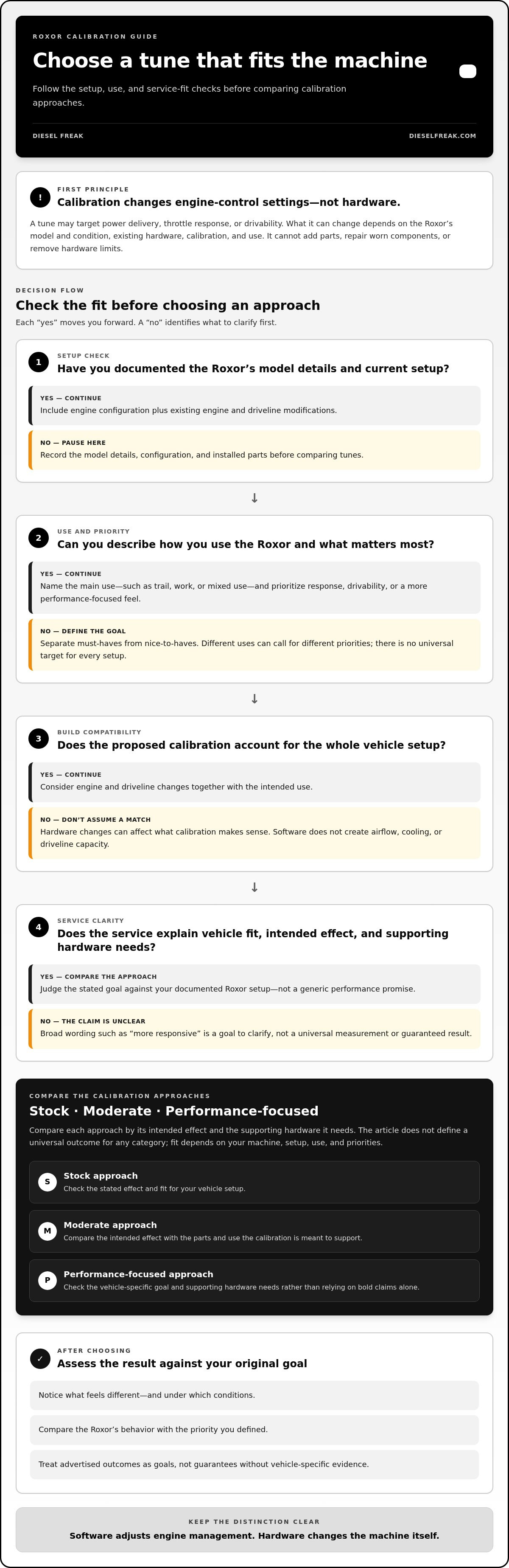
A good calibration plan starts before anyone changes a setting. Define what you want the Roxor to do, document how it’s built, choose an approach that fits, then assess the result against your original goal. The engine calibration process involves balancing engine operation against specific requirements, rather than chasing a number in isolation.
A Roxor calibration is shaped by its model details, existing engine and driveline modifications, intended use, and the owner’s priorities. Keep those factors together. A tune selected without the full vehicle picture can miss the mark.
Start with the Roxor setup and intended use
Record the vehicle’s model details and engine configuration, then list existing modifications. Include engine and driveline changes, not just the parts most visible under the hood. Note how you use the Roxor, too.
Be specific about the job. Recreational trail use may put a premium on predictable response at low speeds. Work use may call for a different balance of response and consistent operation. A mixed-use Roxor has to serve both priorities. There’s no universal target that suits every setup.
Pick your main priority first: response, drivability, or a more performance-focused feel. Rank the priorities so you can separate must-haves from nice-to-haves and give the calibration decision a clear direction.
Understand calibration choices and outcome expectations
With the setup and goal documented, compare calibration approaches by what they’re intended to change and what the vehicle can support. Evaluate Roxor engine calibration services against your machine’s details, not a generic promise that sounds impressive. A stated goal is not the same as a verified result on your vehicle.
Keep the distinction sharp: calibration changes engine-control settings; it doesn’t create the airflow, cooling, or driveline capacity of physical parts. Hardware can affect what a calibration can reasonably accomplish. If a claim doesn’t explain which vehicle setup it applies to or what “improved performance” means, it gives you little basis for comparison.
After selecting a calibration, assess whether the Roxor’s behavior aligns with your goal under the conditions you care about. Note what feels different and when. Don’t treat an advertised outcome as guaranteed without vehicle-specific evidence. This keeps the decision grounded in your build, not hype.
Use the same details to explore Diesel Freak’s Roxor tuning as part of its off-road performance offering. Bring your priorities and setup into the decision. Clear inputs help you make an informed choice.
Roxor calibration options compared: match the tune to your goals
There’s no single best calibration for every Roxor. The right choice depends on what you want the machine to do, how it’s equipped, and the tradeoffs you’re prepared to accept. Use the comparison below as a decision framework, not a promise of a specific result.
Stock setup, moderate tuning, and performance-focused calibration
| Approach | Typical intent | Expected feel | Hardware dependence and considerations |
|---|---|---|---|
| Stock calibration | Keep the factory engine-control setup. | Familiar, unchanged behavior. | Retains the current setup. A sensible baseline if the Roxor’s response already suits its use. |
| Moderate adjustment | Target a measured change in response or drivability. | May feel more suited to a specific use, but the effect depends on the vehicle and calibration. | Review existing modifications and intended use. Don’t assume every build will respond alike. |
| Performance-focused calibration | Prioritize a stronger performance character. | Could shift how power is delivered, subject to the setup and calibration details. | Supporting engine and driveline hardware become important considerations. More aggressive isn’t automatically a better fit. |
A trail-focused owner who values predictable response may choose differently from an owner building around stronger performance. Work use and mixed use bring their own priorities. Compare each option by what it aims to change, what the complete setup can support, and whether the tradeoffs fit your day-to-day use. Exact effects vary with the Roxor and the calibration itself.
How hardware changes affect a calibration decision
Engine or driveline modifications can change the requirements of the overall project. A calibration decision should account for the parts already installed and those planned next. That doesn’t mean a particular turbo or component is required for a tune. It means hardware and calibration shouldn’t be planned in isolation.
Build a clear picture of the whole setup before comparing Roxor engine calibration services. For broader upgrade context, consult a diesel performance parts guide and consider how each physical change relates to your intended use. Keep the goal realistic: software can adjust engine operation, while hardware determines the machine’s physical configuration.
Also separate performance planning from emissions and road-use questions. A calibration choice alone doesn’t establish that a vehicle meets requirements for a particular use. Applicable requirements depend on the vehicle and where and how it’s operated, so don’t treat performance claims as proof of compliance.
How to evaluate Roxor engine calibration services before choosing
Good tuning starts with fit, not hype. Use this checklist to compare Roxor engine calibration services against your vehicle, your goals, and the conditions in which it runs.
A practical checklist for your Roxor tuning decision
- Identify the vehicle. Record its model details and engine configuration so you can judge whether the calibration applies to your Roxor.
- Document the build. List existing engine and driveline modifications, along with supporting parts that may affect the setup.
- Name your goal. Be precise about whether you prioritize response, drivability, or a more performance-focused feel. Include how you use the vehicle, such as trail recreation, work, or both.
- Review the scope. Look for a clear explanation of what the calibration is intended to change, which vehicle setup it fits, and what tradeoffs may come with it.
- Separate facts from claims. Distinguish specific, documented fitment and calibration information from broad phrases like “more power” or “better performance.” Without context, those phrases don’t tell you how a particular Roxor will behave.
Clear information should help you understand the intended result and its limits. If a performance claim doesn’t explain the vehicle setup or conditions it refers to, don’t treat it as a guaranteed outcome or a useful benchmark.
Reliability, emissions, and operating limits
Reliability concerns deserve a straight answer. Calibration decisions should account for engine condition, supporting hardware, driveline setup, and how the Roxor will be operated. A tune can’t make worn components healthy, and no general claim can guarantee how every vehicle will hold up under every load or condition. Include maintenance and the machine’s existing condition in your decision.
Emissions, warranty, and road-use implications also depend on current requirements and the vehicle’s circumstances. Don’t assume a calibration preserves warranty coverage or establishes compliance. Review accurate, current manufacturer and regulatory information relevant to your vehicle and intended use before making changes.
With the checklist in hand, match your priorities to the complete build. Explore Diesel Freak’s ROXOR TUNING and Roxor engine and driveline parts as part of a focused off-road performance plan.
Diesel Freak Roxor tuning: turn your calibration goals into next steps
A solid tuning decision starts with the machine in front of you. Define what you want your Roxor to do, document its model details and existing engine or driveline changes, then compare those facts with the calibration’s intended fit. Diesel Freak offers ROXOR TUNING as an off-road performance option for owners planning their next steps.
Where Diesel Freak Roxor tuning fits your build
Think about the Roxor’s real job. A machine used for recreational trails may have different priorities from one used for work or a mix of both. Note what you value most, such as response, drivability, or a more performance-focused character, and include the supporting engine and driveline setup in your planning.
Diesel Freak also offers Roxor engine and driveline parts, a related category to consider when mapping out a broader build. Tuning doesn’t mean parts are included or that a particular component is required. Keep the calibration choice and hardware plan connected to your vehicle’s configuration and intended use. For broader vehicle and performance context, use a Mahindra Roxor guide as a companion to this tuning discussion.
Diesel Freak is family-owned and was founded in 2009. That background is part of the business, not a promise of a specific performance result. As with any calibration decision, the fit depends on the vehicle, its setup, and the goal.
Move from research to a focused tuning decision
Before moving forward, bring the key details together:
- Define your goal. Be clear about the change you want in how the Roxor operates.
- Document the setup. Note model details and existing engine and driveline modifications.
- Review fit and expectations. Look for calibration information that relates to your vehicle and explains intended effects without treating them as guaranteed outcomes.
This process helps you avoid choosing by headline claims alone. It also gives you a practical way to compare a calibration’s stated purpose with your build and the conditions in which you drive.
Explore Diesel Freak’s ROXOR TUNING with your goals, vehicle details, and supporting setup in view.
Build a Tune Around the Roxor You Drive
The right calibration starts with your machine, not a headline claim. Match the tune to your Roxor’s model details, engine and driveline setup, and intended use. Remember the line between software and hardware: calibration adjusts engine operation, while physical upgrades change the vehicle’s components. A more aggressive approach isn’t automatically the right one.
Use those factors to assess Roxor engine calibration services. Look for clear information about vehicle fit, intended changes, and tradeoffs, then weigh those details against your goals. Keep reliability, emissions, warranty, and road-use considerations grounded in accurate information for your vehicle and intended operation.
Diesel Freak is family-owned and operated, and was founded in 2009. Its off-road performance offering includes ROXOR TUNING and Roxor engine and driveline parts. Explore Diesel Freak Roxor tuning and take the next step with your goal, vehicle details, and supporting setup in view.
Frequently Asked Questions
What does Roxor engine calibration change?
Roxor engine calibration adjusts engine-control software to change how the engine operates. Depending on the calibration and vehicle setup, its goals may include adjusting engine response, drivability, or power delivery. It doesn’t replace or add mechanical parts, and it can’t compensate for worn components. The actual effect depends on the Roxor’s model details, existing hardware, calibration, and intended operating conditions.
Can engine calibration improve Roxor performance?
Calibration can aim to improve how a Roxor delivers performance, but the result isn’t guaranteed to be the same across vehicles. A change that suits one setup may not feel the same on another, especially if their modifications or uses differ. Define what “improvement” means for you, such as more responsive operation or a performance-focused feel, then assess claims against your vehicle and its hardware.
Is Roxor engine tuning safe for the engine?
No tune can guarantee engine reliability across every vehicle and operating condition. The decision should account for engine condition, supporting hardware, driveline setup, calibration details, and how the Roxor will be used. A tune can’t repair wear or make an unsuitable setup risk-free. Start with an accurate picture of the machine and weigh the intended changes against its condition and the work it needs to do.
Do I need engine upgrades before Roxor calibration?
Not necessarily. Whether hardware changes make sense depends on the calibration goal, your Roxor’s current configuration, and how you use it. A stock setup and a modified build can have different considerations. List existing engine and driveline parts before choosing a calibration, and don’t assume a particular upgrade is required unless that requirement is clearly stated for the specific tune and vehicle setup.
How do I choose a Roxor calibration service?
Choose based on vehicle fit and clear expectations, not a headline performance claim. Record your Roxor’s model details, modifications, intended use, and primary goal. Then review whether the calibration information explains compatibility, intended changes, and relevant tradeoffs. Diesel Freak offers ROXOR TUNING as part of its off-road performance lineup, alongside Roxor engine and driveline parts. Match your decision to the complete build.
Can a Roxor tune affect emissions compliance or warranty coverage?
It can have implications, but the answer depends on the calibration, vehicle, intended operation, and applicable current requirements. Don’t assume a tune makes a Roxor compliant for a particular use or preserves warranty coverage. Before changing the calibration, review accurate, current information relevant to your vehicle, its warranty terms, and where and how you plan to operate it. Performance claims alone don’t establish compliance.
Disclaimer
Diesel Freak LLC is in no way associated, sponsored, or affiliated with Any OEM manufacturer. Products from Diesel Freak LLC presented in this listing are not to be confused with any of the products or trademarks of any OEM company. All parts listed to fit these manufacturers are replacement aftermarket parts.