

Your stock exhaust isn't just quiet. It's a chokehold on your engine’s heart. You didn't buy a Roxor to stay restricted by factory limits; you want raw, unfiltered diesel power. Most owners feel the frustration of sluggish turbo response and climbing EGTs when they push their rig off-road. It's a common pain. Installing a high-quality Roxor performance exhaust system is the fastest way to let that 2.5L or 2.7L breathe. You need a system built for grit, not a cheap, rusting kit that falls apart after one season of mud.
We get it. You demand mechanical superiority and a sound that commands respect. This guide breaks down everything you need to know to choose and install the ultimate exhaust setup. We'll show you how to maximize turbo spool and slash operating temperatures for long-term engine health. From understanding pipe diameters to selecting rugged materials, you're about to transform your Roxor into the dominant machine it was meant to be. Forget the factory restrictions. It's time to unlock your diesel's true potential.
Key Takeaways
- Learn how a Roxor performance exhaust system eliminates factory bottlenecks to slash EGTs and protect your engine.
- Master the mechanical specs like mandrel bending and stainless steel grades to ensure your rig survives harsh off-road abuse.
- Get the step-by-step prep list for a seamless install without damaging critical sensors or factory hangers.
- Discover why high-flow exhaust is the mandatory foundation for unlocking massive horsepower gains with Stage 1 and Stage 2 tuning.
- Identify the exact upgrades needed to maximize turbo spool and give your Roxor a rugged, authoritative exhaust note.
Why Your Mahindra Roxor Needs a Performance Exhaust Upgrade
The factory Mahindra Roxor is a rugged machine, but it’s breathing through a straw. Stock pipes are designed for corporate compliance and strict noise regulations. They aren't built for peak performance. This creates a massive bottleneck right where it hurts most: the turbocharger. Restrictive piping traps scorching gases. It forces your engine to fight itself just to exhale. Installing a Roxor performance exhaust system is about more than a better note. It’s about thermal management and raw mechanical efficiency. Diesel Freak exists to unleash that potential by replacing these restrictive factory parts with gear that actually works.
When you eliminate the factory choke point, you change the engine's entire dynamic. The turbocharger spools faster because there is less resistance on the turbine wheel. You get into the power band earlier in the RPM range. No more sluggish starts. No more waiting for the boost to catch up to your right foot. You get instant response when you’re climbing a ledge or pulling a trailer. It transforms the driving experience from restrained to responsive.
The Science of Diesel Backpressure
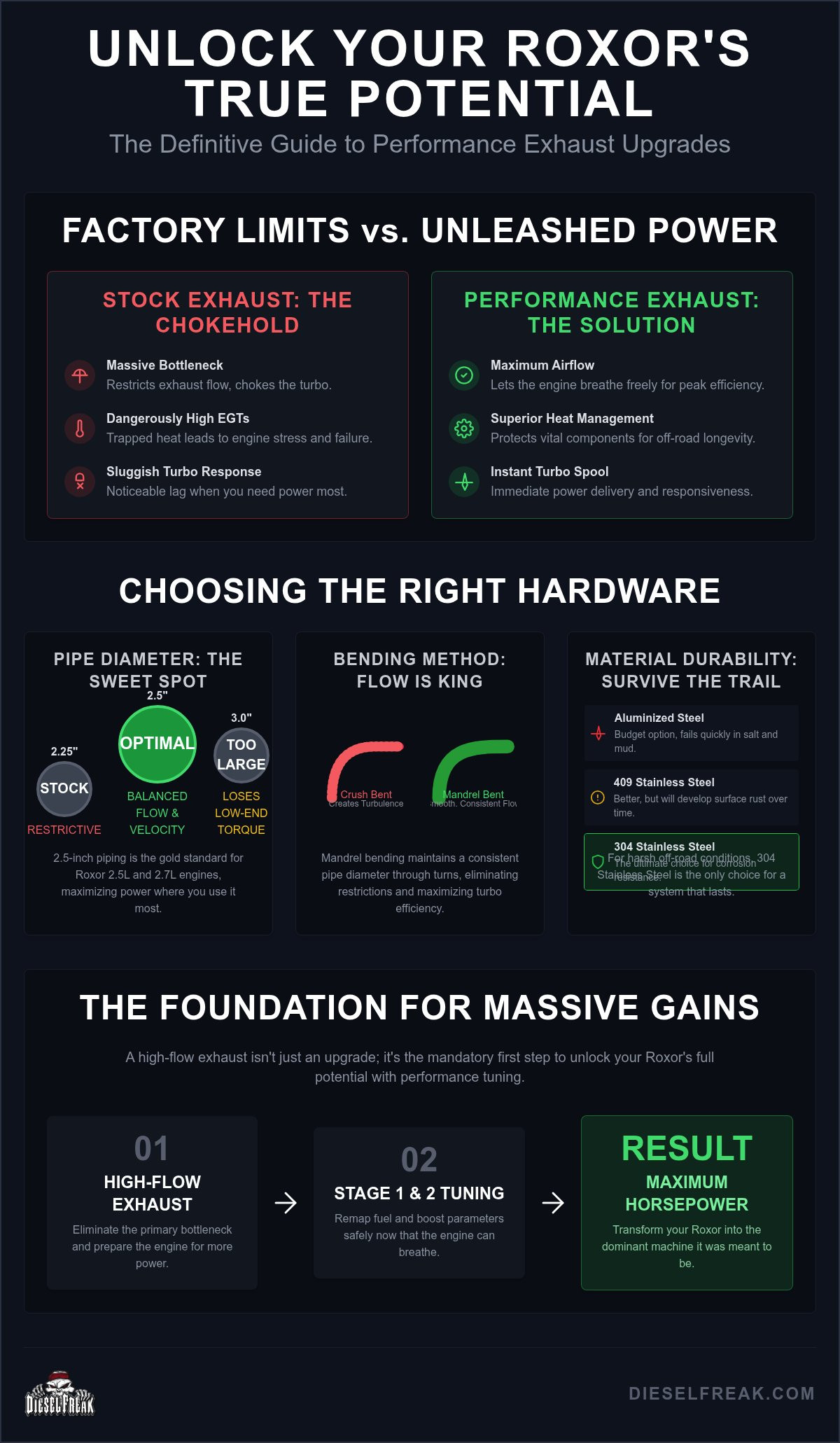
Turbocharged engines don't need backpressure. That's a myth that won't die. They actually thrive on a pressure differential. You want high pressure before the turbo to spin the wheel and near-zero pressure in the Exhaust system to let it exit. A larger diameter pipe, moving from the stock 2.25-inch diameter to a 2.5-inch performance kit, significantly reduces pumping losses. Pumping losses happen when the piston has to work to push gas out of the cylinder. Lower that resistance and you gain free horsepower. High-flow systems ensure the engine spends less energy moving air and more energy moving tires.
Heat Management for Off-Road Longevity
EGTs are the silent killer of diesel engines. Exhaust Gas Temperatures measure the thermal stress on your pistons and turbocharger; sustained high EGTs cause metal fatigue and catastrophic engine failure. When you're crawling in low gear or hauling nearly 3,500 pounds, heat builds up fast. Airflow over the engine is minimal. You need to move that heat out through the pipe quickly. A high-flow system acts like a thermal relief valve. It draws energy away from the engine block. It keeps your internal components within safe operating ranges. This isn't just about speed. It’s about making sure your Roxor survives years of grit and abuse on the trail.
Choosing the Right Roxor Performance Exhaust System
Selecting a Roxor performance exhaust system isn't just about picking a shiny pipe. It’s about matching the hardware to your mission. You need a setup that survives the vibration of a high-torque diesel while resisting the salt and mud of the trail. Cheap DIY straight pipes might sound loud, but they often lack the precision of a mandrel-bent system. Consistency is king. If the pipe's diameter shrinks in the bends, your performance gains vanish.
Flow dynamics dictate your power curve. Mandrel bending uses a solid insert during the manufacturing process to keep the pipe's interior perfectly smooth through every turn. This ensures your turbo isn't fighting turbulence. Beyond flow, you have to decide on the exit style. Side exits keep the tip away from departure angle hazards, making them ideal for deep mud and rock crawling. Rear exits provide a balanced look and direct the diesel grunt away from the cabin for a more comfortable ride on the road.
- Straight-Through Designs: Maximum flow and the most aggressive sound profile.
- Muffled Systems: Tames the rasp while still providing a deep, authoritative tone.
- Exit Clearance: Choose a tip location that won't get crushed on a steep ledge.
Pipe Diameter: Is Bigger Always Better?
For the 2.5L and 2.7L Roxor engines, 2.5-inch piping is the gold standard. It balances total volume flow with exhaust gas velocity. If you go too big, like a 3-inch system, you lose the velocity needed to scavenge the cylinders efficiently. This can kill your low-end torque. You want a system that builds power where you actually drive, not just at the redline. While performance is the goal, remember that these rigs must still align with US EPA emission standards for nonroad engines. Stick to the sweet spot for the best results.
Corrosion Resistance for Rugged Terrain
Off-roading is a war on metal. Aluminized steel is a budget option that fails the moment it hits salt or standing water. 409 stainless steel is better but will develop surface rust over time. For the ultimate durability, 304 stainless steel is the only choice. It contains higher chromium and nickel levels to stop corrosion cold. Diesel Freak specializes in rugged components that withstand the elements. If you want gear that looks and performs as hard as your rig, explore our Roxor engine and driveline selection to build a bulletproof setup.
How to Install a Roxor Performance Exhaust System
Installing a Roxor performance exhaust system is a rite of passage. You’re trading factory restrictions for high-flow muscle. Do it right the first time. Start by gathering your gear. You need a quality socket set, a torque wrench, and heavy-duty hangers. Don't forget a can of PB Blaster. Stock bolts on a diesel manifold are notorious for seizing. Soak them early. Soak them often. If you snap a stud, your quick afternoon project turns into a weekend nightmare. Precision matters here.
Disconnect the sensors with care. The factory sensors are fragile and expensive. Don't bang them around or cross-thread them during the swap. Once the sensors are clear, drop the restrictive stock piping. It’s heavy. It’s awkward. Use a jack stand if you're working alone. While you're under there, keep in mind that modifying your rig should be done with an eye on off-road diesel emissions regulations to stay compliant on public lands. Removing the old system is the hard part; the new kit should slide right into place.
Step-by-Step Installation Walkthrough
Start at the turbo. Bolt the new downpipe loosely to the flange. Don't tighten it yet. You need wiggle room to align the mid-pipe and tailpipe perfectly. Clearance is everything. You don't want your new stainless investment rattling against the frame or melting a brake line. Once the path is clear, slide on the heavy-duty hangers. These aren't just for show. They prevent the Roxor performance exhaust system from shaking itself apart when you're bouncing through a wash or climbing a ledge. Secure the clamps once everything sits level.
Post-Installation Inspection
Fire it up. Listen for that new, authoritative diesel grunt. Look for "soot spots" near the joints. If you see black dust, you have an exhaust leak. Tighten the clamps immediately. Take it for a twenty-minute drive to get the metal up to operating temperature. This is the first heat cycle. Metal expands. Once you're back in the garage, let it cool and hit every bolt with the torque wrench one last time. A professional finish means zero rattles and zero leaks. Your rig is now ready for the dirt.
Maximizing Gains: Exhaust and ROXOR Tuning
Installing a Roxor performance exhaust system is the first step toward total dominance. It’s the foundation. Without it, your engine stays choked by factory limits. But to truly unleash the beast, you must talk to the brain. ECU tuning takes that increased airflow and turns it into measurable, ground-pounding power. It’s about mechanical synergy. You’ve cleared the throat; now you need to adjust the lungs and the heart. This combination is what separates a stock rig from a true off-road predator.
A high-flow exhaust allows for more aggressive fuel maps. It’s the mandatory prerequisite for any serious Stage 1 or Stage 2 tune. When you combine exhaust flow with ROXOR tuning, you finally kill that factory 45 mph speed limiter. You unlock the torque that Mahindra hid behind corporate safety walls. But don't just focus on the engine. You need Mahindra Roxor drivetrain upgrades to handle that new surge of power. If you don't strengthen the driveline, you're just building a faster way to break parts. Strength must match speed.
Why Tuning is Necessary After Exhaust Upgrades
Reduced backpressure changes the engine's entire operating environment. The factory ECU expects a specific amount of resistance. When that resistance vanishes, the turbo can spin faster than the stock maps intended. Tuning prevents over-boosting. It recalibrates the fuel-to-air ratio to match the new, higher air volume. This optimization ensures you get the most out of your Roxor performance exhaust system without risking engine health. You get more power. You get lower temperatures. You get reliability.
Performance Synergy with Turbo Upgrades
The ultimate build doesn't stop at the pipe. Pair your high-flow exhaust with a BorgWarner turbo for maximum boost pressure. This setup creates a closed-loop performance system that breathes deep and exhales fast. Add upgraded charge air plumbing to the mix. Now you’re moving massive air volume with zero leaks. It’s a mechanical symphony of grit and speed. Monitoring your vitals is critical here. An EGT gauge is a diesel freak's best friend. It tells you exactly when to push and when to back off. Stay informed. Stay fast.
Don't settle for half-baked performance. Finish the job with the right software. Explore our complete ROXOR tuning kits and start dominating the trail today.
The Diesel Freak Advantage: Built for the Gritty
We don't do "subtle" performance. If you're looking for a quiet, factory-adjacent upgrade, you're in the wrong shop. Diesel Freak is built on the thrill of high-performance machinery. We provide expert-vetted parts that we use on our own rigs. Every Roxor performance exhaust system we offer is selected for its ability to dominate. We value strength. We value raw capability. We are your allies in the pursuit of peak mechanical potential. Forget the fluff. Focus on the power.
Our team lives the diesel lifestyle every single day. We understand the grit required to keep a machine running in the harshest conditions. We aren't just selling a product; we're sharing a passion for heavy-duty mechanics. This isn't corporate noise. It's family-rooted reliability backed by a rebellious spirit. When you buy from us, you're getting hardware that has been pushed to the limit. We expect our gear to survive the abuse. You should too.
Rugged Gear for Rugged People
Expertise matters. We cut our teeth on Class 8 semi-trucks, where durability is the only metric that counts. We brought that same "bulletproof" mentality to the Mahindra Roxor community. Our parts are tested to survive mud, snow, and extreme vibration. We know diesel performance inside and out. From turbochargers to charge air coolers, we provide the ultimate source for your engine and driveline needs. Join our community of enthusiasts. Gear up for the shop or the trail with a diesel hoodie that matches your passion for performance.
Get Started with Diesel Freak
Build your rig with confidence. You have direct access to performance specialists who understand the nuances of the Roxor platform. We don't just ship boxes. We provide mechanical solutions. Whether you're planning a Stage 2 tune or a full turbo swap, we have the hardware and the knowledge to get you there. We offer nationwide shipping on all heavy-duty diesel hardware. Your next upgrade is only a few clicks away. Stop letting your engine stay restricted. It's time to unleash the beast. Shop Roxor Performance Exhaust Systems at Diesel Freak and experience the difference that raw, unapologetic power makes.
Claim Your Power on the Trail
Your Mahindra Roxor was built for the grit. Don't let a restrictive factory pipe hold it back. Upgrading to a high-quality Roxor performance exhaust system is the foundational step toward mechanical dominance. You've seen how reduced backpressure slashes EGTs and speeds up turbo spool. You've learned why pairing this increased flow with expert tuning is the only way to truly unlock your diesel's heart. This isn't just about a rugged note; it's about building a machine that survives the harshest abuse without flinching.
As a family-owned diesel authority, we provide gear that is rugged and off-road performance tested. Our expert Roxor tuning specialists are ready to help you build a bulletproof rig that leaves the speed limiter in the dust. Stop settling for stock limitations. Unleash your Roxor's potential at Diesel Freak and start dominating the dirt today. You demand the best from your machinery; we deliver the parts that make it possible. Get out there and push the boundaries of what your diesel can do.
Frequently Asked Questions
Will a performance exhaust void my Mahindra Roxor warranty?
Modifying your rig with a performance exhaust doesn't automatically kill your warranty. Dealers must prove the aftermarket part caused a specific failure to deny a claim. It's about accountability. If your new pipe doesn't cause the engine to melt, you're usually in the clear. Always check with your specific dealer first. Stay protected by choosing high-quality hardware that fits correctly and doesn't stress other engine components.
Does a performance exhaust make the Roxor street legal?
No, an exhaust swap alone won't make your Roxor street legal. These machines are classified as off-road side-by-sides from the factory. Making one legal for the road involves DOT compliance, including lights, mirrors, and specific state registrations. A high-flow exhaust is for performance and thermal management on the trail. It doesn't bypass the 45 mph factory speed limiter or change the vehicle's legal status on public highways.
How much horsepower can I expect from a Roxor exhaust upgrade?
A standalone exhaust upgrade typically nets between 5 and 10 horsepower. The real magic happens when you pair it with tuning. A Roxor performance exhaust system clears the path for massive gains. When you unlock the ECU and increase fueling, that high-flow pipe becomes essential. It allows the engine to breathe under higher boost levels. You're building a foundation for serious power, not just making a cosmetic change.
Is a 3-inch exhaust too big for a stock Roxor engine?
Yes, a 3-inch pipe is usually overkill for a stock 2.5L or 2.7L engine. Bigger isn't always better in the diesel world. You need to maintain exhaust gas velocity to scavenge the cylinders efficiently. A 2.5-inch system is the sweet spot for these engines. It provides enough volume for high-end power without killing your low-end torque. Stick to the diameter that keeps your turbo spooling fast and responsive.
Do I need to delete the DPF to install a performance exhaust?
You don't have to delete the DPF for every upgrade. Cat-back systems work with your factory emissions gear. However, many "race" or "off-road" turbo-back systems do remove restrictive components. This is where you see the biggest drops in EGTs and faster turbo response. Remember that removing emissions equipment is for off-road use only. Choose the Roxor performance exhaust system that matches your performance goals and local regulations.
What is the best material for an off-road Roxor exhaust?
304 stainless steel is the undisputed king of off-road materials. It handles the heat, mud, and salt without rotting away. Aluminized steel is cheap but fails quickly in wet environments. 409 stainless is a decent middle ground, but it still develops surface rust over time. If you want gear that survives years of grit and abuse, invest in 304. It's the standard for anyone serious about long-term mechanical superiority.
How does a performance exhaust affect fuel economy in a diesel?
Efficiency goes up when your engine doesn't have to fight to exhale. By reducing pumping losses, a performance exhaust allows the engine to operate more efficiently. You might see a slight bump in MPG under steady cruising conditions. Of course, most drivers use that extra power to push harder on the trail. If you keep your foot out of it, the improved airflow naturally leads to a more efficient combustion cycle.
Can I install a performance exhaust myself with basic tools?
You can absolutely handle this install in your own garage. It’s a straightforward bolt-on project. You’ll need a solid socket set, a torque wrench, and plenty of penetrating oil for those factory manifold bolts. Most kits are designed to use factory hanger locations for a clean fit. Take your time with the alignment to avoid frame rattles. It’s a great way to get hands-on with your machine’s performance and grit.
Disclaimer
Diesel Freak LLC is in no way associated, sponsored, or affiliated with Any OEM manufacturer. Products from Diesel Freak LLC presented in this listing are not to be confused with any of the products or trademarks of any OEM company. All parts listed to fit these manufacturers are replacement aftermarket parts.