

Your Mahindra Roxor isn't a driveway trophy; it's a grit-spitting beast that demands a clear line of sight to dominate the trail. When you're buried in mud or caught in a 2026 winter whiteout, visibility is the difference between a successful run and a wrecked front end. Proper Roxor wiper system maintenance is a tactical requirement for any serious off-roader. You've likely felt the frustration of a weak motor struggling against heavy slush or a washer nozzle choked by dried trail sludge. It's a failure point you can't afford when the terrain gets technical.
We're here to make sure your glass stays crystal clear regardless of the conditions. You need a system that survives vibration and handles the abuse of the backwoods without leaking a drop. This guide delivers the expertise required to master your wiper assembly and reservoir. We'll break down how to bulletproof your washer tank against cracks, clear out stubborn clogs, and keep your motor running with peak mechanical dominance. Get ready to transform your visibility from a liability into a performance advantage.
Key Takeaways
- Identify the core mechanical components of your visibility system and understand why marine-grade motors are the standard for off-road durability.
- Protect your washer reservoir from trail-induced stress fractures and sediment buildup with a proactive inspection and flushing schedule.
- Master Roxor wiper system maintenance by learning to diagnose linkage failures and blade wear before they compromise your line of sight.
- Transition your system for the 2026 winter season by flushing summer fluids and selecting high-performance de-icers that won't freeze under pressure.
- Upgrade to high-low motion marine assemblies to ensure reliable performance and extended motor life in the most punishing environments.
Anatomy of the Roxor Wiper and Washer System
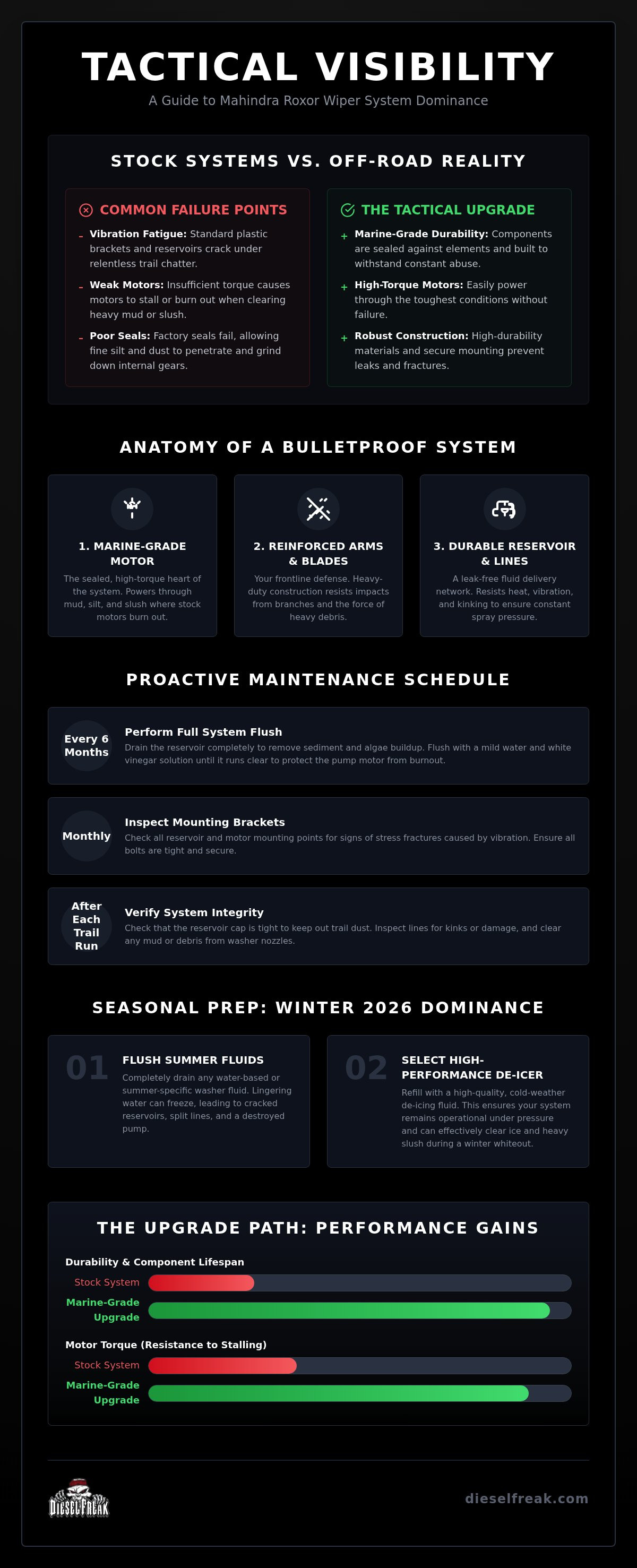
Understanding the Anatomy of a Windscreen Wiper is the first step toward mechanical dominance. Your Roxor is a heavy duty machine. It isn't a highway commuter. Every component in the visibility chain must be built for extreme abuse. The wiper motor is the heart of this system. In high performance OTR kits, these are marine grade units. They're sealed against the elements. Standard motors die when hit with pressurized water or fine silt. These don't. Next come the arms and blades. They are your frontline defense. They take the hit from mud, branches, and grit. Finally, the windshield wiper water reservoir and delivery lines provide the fluid needed to clear the carnage. If one link breaks, your visibility dies.
Why Stock Systems Often Fail Off-Road
Standard setups aren't built for the trail. Vibration fatigue is a silent killer. Standard plastic brackets rattle until they snap under the pressure of 2026 trail conditions. Dust and fine silt penetrate weak seals. This grit grinds down internal gears. Most stock motors lack the torque to move heavy trail mud. They stall. They smoke. They burn out when the resistance gets too high. Effective Roxor wiper system maintenance starts with acknowledging these weaknesses. You need components that thrive where others quit. Don't settle for factory parts that crumble when the terrain gets technical. Build for durability instead.
The Role of the Windshield Wiper Water Reservoir
Your reservoir is more than a plastic jug. It's a critical storage unit. Placement matters. Heat from the engine bay can warp cheap reservoirs over time. Vibration causes stress fractures at the mounting points. The pump to reservoir connection must be rock solid. If it's loose, you lose pressure. You need enough capacity for long distance trail rides. Running dry in the middle of a mud bog is a tactical failure. Ensure your reservoir is secured and leak free. Check the seals every time you pop the hood. A cracked tank is a useless tank.
Fluid lines and nozzles are the delivery network. They often clog with dried mud or mineral deposits. This prevents fluid from reaching the glass. You need clear lines for a clear view. Check the nozzle aim frequently. Trail branches can knock them out of alignment. Keep the spray hitting the center of the glass for maximum coverage. This is essential for proper Roxor wiper system maintenance. Clean the nozzles with a fine needle if the spray pattern becomes weak. Never let a simple clog ruin your day on the trail.
Essential Maintenance for the Windshield Wiper Water Reservoir
Off-road vibration is a relentless enemy. It kills parts. Your reservoir sits in the line of fire. Check the mounting points immediately. Trail chatter creates high-frequency stress. This leads to hairline fractures in the plastic. If you ignore them, the tank will split wide open on a high-speed run. Roxor wiper system maintenance isn't just about the blades. It's about the containment system. Ensure every bolt is tight. Use rubber washers if possible. They dampen the impact. You want a setup that survives the washboard roads of 2026 without cracking under pressure.
Don't overlook the pump seals. Heat and chemical exposure cause dry-rot. A leaking seal means a dead pump. Inspect the reservoir cap too. A loose cap lets in trail dust. Dust turns into mud inside your tank. Mud destroys pumps. Keep it sealed. Keep it clean. If your current tank is showing signs of fatigue, look into the high-durability Roxor windshield accessories built for mechanical dominance.
Cleaning Your Windshield Wiper Water Reservoir
Draining the system is simple. Disconnect the primary line at the pump. Let gravity do the work. Use a catch pan to avoid a mess. If you see green film or sludge, you have algae. Use a mild solution of warm water and white vinegar. Shake it. Flush it. Repeat until the water runs clear. The reservoir acts as a settling tank for contaminants, preventing them from reaching and burning out your pump. Flush the reservoir every six months to maintain peak performance.
Inspecting Fluid Lines and Connectors
Trace every inch of your lines. Start at the tank. Move toward the nozzles. Look for brittle spots. Engine bay heat cooks standard rubber. If it feels crunchy, replace it. Secure loose lines with zip ties. You don't want a line snagging during extreme articulation. A caught line will rip the connector right off the pump. Check for kinks that restrict flow. Your delivery network must be as rugged as your driveline.
- Every 6 Months: Perform a full system flush to remove sediment.
- Monthly: Inspect brackets for stress fractures.
- Post-Trail: Verify cap integrity and nozzle alignment.
- Seasonally: Treat pump seals with silicone spray to prevent dry-rot.
Troubleshooting Common Wiper Failures in Off-Road Conditions
Trail conditions are brutal. Failure isn't a matter of if, but when. If your motor hums but the arms stay dead, you've likely popped a linkage clip. Off-road vibration is a relentless beast. It shakes hardware loose until the mechanical bond snaps. Check the pivot points immediately. Re-seat the clips. Ensure the connection is locked down. This is the frontline of Roxor wiper system maintenance. You can't dominate the terrain if your equipment is rattling apart under the hood.
Streaky visibility is a tactical hazard. It's rarely just a "worn blade" from old age. Trail grit acts like sandpaper. It chews through rubber in a single weekend of heavy mudding. Inspect the blade edge for deep gouges caused by low-hanging branches or flying debris. If the wiper arm itself is bent, the pressure distribution is shot. You'll get patches of clear glass surrounded by smears of filth. Replace the arm to restore full-surface contact. Don't compromise on your line of sight.
No spray means no visibility. Check the fuse first. If the pump is silent, you have an electrical bottleneck. If the pump whirrs but nothing hits the glass, you have a blockage. Wipers that won't park are a sign of a failing internal limit switch. This usually means the motor's internal timing is fried from overwork or excessive heat. It's a common failure in 2026 for rigs pushed to their absolute limit. Diagnosing these issues early prevents a total system blackout when you're miles from the garage.
Clearing Clogged Washer Nozzles
Trail dust is fine. It packs into nozzles like wet concrete. Grab a fine needle. Pick out the surface debris carefully. Don't shove the grit deeper into the line. If that fails, disconnect the line at the nozzle base. Back-flush it with a quick burst of compressed air. This blows the silt out the way it came in. Upgrading to adjustable nozzles is a smart move. They allow you to dial in the spray pattern. You need fluid hitting the glass even when your rig is tilted on a 30-degree incline.
Diagnosing Wiper Motor Issues
Start with a multimeter. Check for 12V at the motor connector. If power is present but the motor is dead, look for signs of water intrusion. Standard motors aren't sealed against the mud bogs. You'll see rust streaks or dried silt inside the casing. This is a death sentence for standard electronics. You can try to clean the brushes, but it's a temporary fix at best. When reliability is the goal, replace the unit with a high-performance OTR assembly. These marine-grade units are built to handle the soakings that kill factory parts. Master your Roxor wiper system maintenance by knowing when to rebuild and when to upgrade for total mechanical dominance.
Step-by-Step Guide to Cleaning and Winterizing Your System
Winter doesn't care about your trail plans. Sub-zero temperatures turn summer fluid into a solid block of ice. This ice expands. It shatters plastic. Stop treating your rig like a fair-weather toy. Roxor wiper system maintenance requires a seasonal shift in strategy. Start by flushing every drop of summer-grade fluid from the lines. Replace it with a high-performance winter blend containing de-icer properties. Look for a rating of at least -40°F to ensure your lines stay liquid when the mercury drops. This is the only way to protect your pump from a frozen death.
Lubrication is your next priority. Apply silicone spray to the wiper pivot points. This prevents road salt and slush from seizing the mechanism. Inspect the rubber seals on your reservoir and pump. Treat them with a rubber protectant to stop them from becoming brittle. If your rig features a custom cab with heater or defrost sync, test the system now. You want that glass warm before the wipers ever touch the ice. If you need a complete overhaul before the first storm hits, shop Roxor wipers and windshields to bulletproof your visibility.
Preparing the Windshield Wiper Water Reservoir for Freezing
Follow the expansion room rule. Never fill your reservoir to the absolute brim in winter. Leave at least two inches of headspace. This allows the fluid to expand slightly without blowing the cap or cracking the tank. Always check the pump for ice blockage before you hit the switch. For sub-zero trail runs, the ideal fluid mix is a 100% undiluted winter concentrate to prevent slush buildup in the lines. Forcing a frozen pump is a one-way ticket to electrical failure. Don't burn out your motor because you were too impatient to thaw the lines.
Wiper Blade Care for Snow and Ice
Don't let your blades bond to the glass. Lift them when you park. This simple move prevents the rubber from tearing when you clear the windshield. Clean the blade edge with a cloth soaked in rubbing alcohol. This removes the oily film and road salt that causes streaks. If you're facing heavy 2026 snowfall, switch to heavy-duty winter blades. These feature a protective boot that prevents ice from clogging the frame. Keep your frontline gear ready for the assault. A clear windshield is a tactical advantage you can't ignore.
Upgrading to Marine-Grade Roxor Wiper Components
Standard equipment fails when the environment gets real. You don't drive a grocery getter. You drive a Roxor. Open-cab configurations expose your electronics to everything the trail throws. Rain. Mud. Pressure washers. Standard wiper motors aren't built for this level of saturation. They short out. They corrode. Marine-grade components are the only logical choice for 2026. These units are built to withstand saltwater spray and constant moisture. If they can handle the ocean, they can handle your local mud bog. Upgrading shifts your Roxor wiper system maintenance from constant repair to simple verification. You want parts that work every time you hit the switch. Don't settle for factory weakness.
The OTR Roxor Windshield Wiper Assembly Advantage
The OTR assembly is a tactical game changer. It features true 2-speed high-low motion. This isn't a luxury. It's a survival tool for heavy rain. In a downpour, a single-speed motor leaves you blind. You need that high-speed burst to clear the glass instantly. Sync features keep your field of vision consistent. Both blades move in harmony. No staggered movement. No overlapping blind spots. These assemblies are designed for custom windshield frames. They provide a clean, professional fit without the rattle of universal kits. Learn more about the Mahindra Roxor's toughest upgrades to see how we build for mechanical dominance. Every component undergoes rigorous durability testing. We simulate the worst off-road and marine environments. We ensure your gear survives the grit.
Investing in Long-Term Visibility
Stop wasting cash on cheap plastic replacements. Constant repairs are a drain on your time and wallet. Think about the long game. A robust, marine-grade wiper system is a one-time tactical investment. It drastically increases trail safety. It ensures you never have to call off a run because of a sudden storm. High-performance wipers give you the confidence to push into the chaos. You focus on the line. The wipers focus on the glass. Pair your motor upgrade with a tank that won't crack under vibration. Explore our full range of windshield washer reservoirs to complete your visibility package. Build a rig that sees through the mud. Demand mechanical superiority. Secure your visibility today. Your rig deserves the best components available.
Dominating the Chaos with Crystal Clear Vision
Visibility isn't just about comfort. It's about tactical survival on the trail. You've learned that standard plastic hardware can't handle the vibration of a real off-road run. You know that marine-grade motors are the only way to survive a 2026 mud bog without a total electrical blackout. Consistent Roxor wiper system maintenance keeps your rig ready for the assault. Whether you're flushing out sediment from your reservoir or winterizing your lines for sub-zero grit, every step ensures your line of sight remains bulletproof. Don't let a clogged nozzle or a burnt-out motor end your day early.
Stop settling for factory components that crumble under pressure. Diesel Freak has been trusted by diesel enthusiasts since 2009 to deliver mechanical superiority. Our OTR wiper assemblies are engineered specifically for custom frames. They feature the marine-grade durability required for open-cab dominance. Upgrade Your Visibility with Diesel Freak’s Roxor Wiper Assemblies and see the difference that high-performance engineering makes. Get back to the trail. Push your limits. We'll make sure you see every obstacle in your path.
Frequently Asked Questions
How often should I check my Roxor's windshield wiper water reservoir?
Check your reservoir at least once a month or after every heavy trail run. Off-road vibration is a constant threat that creates stress fractures in plastic mounting points. Inspect the fluid levels and the mechanical integrity of the tank brackets to prevent a mid-trail failure. Regular Roxor wiper system maintenance ensures you aren't caught blind when the mud starts flying. Stay ahead of the damage before it stops your run. Inspect the cap too.
Can I use standard automotive wiper blades on my Roxor?
You can use standard blades if the length and attachment style match your wiper arms. However, standard rubber often fails under the abrasive grit of off-road environments. Look for heavy-duty silicone or synthetic blades designed for extreme debris. These materials resist tearing when dragging across dried mud or trail silt. Investing in rugged blades prevents the streaky visibility that ruins technical maneuvers in the woods. Ensure the arm pressure is high to clear the glass.
Why is my Roxor washer pump making noise but not spraying fluid?
A noisy pump without spray usually indicates a blockage in the lines or an empty reservoir. If the tank is full, check the fluid lines for kinks or disconnected fittings. Dried mud often packs into the nozzles, creating a solid plug that the pump cannot overcome. Disconnect the primary line and test the pump flow directly. This isolates the problem to the delivery network or the pump's internal impeller. Fix it fast.
Is it necessary to upgrade to a marine-grade wiper motor?
Upgrading is essential if you operate an open-cab Roxor in wet or muddy conditions. Standard automotive motors lack the internal seals required to survive direct water intrusion or high-pressure washing. Marine-grade units feature gaskets that block moisture and fine silt from frying the electrical contacts. This upgrade is a core part of long-term Roxor wiper system maintenance for owners who demand total mechanical dominance in 2026. Protect your electrical investment now.
How do I prevent my washer nozzles from clogging with mud?
Install adjustable nozzles with high-clearance openings to reduce the risk of sediment buildup. You can also apply a thin layer of hydrophobic coating around the nozzle tip to prevent mud from sticking. Always flush the system after a mud bogging session to clear any surface grit before it dries. Keeping the delivery path clear is a tactical requirement for maintaining a clear line of sight during intense off-road sections. Check for clogs after every run.
What is the best way to repair a cracked wiper fluid reservoir on the trail?
Use a high-strength plastic epoxy or heavy-duty waterproof tape for a temporary trail fix. Clean the surface around the crack thoroughly to ensure the adhesive bonds to the plastic. This repair is only a stopgap to get you back to the garage. Trail vibration will eventually reopen the fracture. Plan to replace the unit with a high-durability reservoir once you return to civilization to ensure leak-free performance. Don't let a leak kill your visibility.
Can I use plain water in my reservoir during the summer?
Avoid using plain water because it lacks the surfactants needed to break down trail oils and bugs. Water also fails to lubricate the pump seals, which leads to premature dry-rot and failure. Use a dedicated summer washer fluid that includes cleaners designed for organic debris. This keeps the glass clear and extends the lifespan of your pump. Proper fluid choice is a simple but vital part of your visibility strategy. Keep the pump running smooth.
How do I sync my dual wiper motors if they get out of alignment?
Sync your motors by adjusting the mechanical linkage or checking the timing on the sync-start wiring harness. If one motor lags, inspect the electrical ground for high resistance. Loose connections cause voltage drops that slow down individual motors. Ensure both arms are positioned at the same park angle before tightening the mounting nuts. Consistent timing prevents the blades from overlapping or leaving unswept patches on the windshield. Keep your vision clear.
Disclaimer
Diesel Freak LLC is in no way associated, sponsored, or affiliated with Any OEM manufacturer. Products from Diesel Freak LLC presented in this listing are not to be confused with any of the products or trademarks of any OEM company. All parts listed to fit these manufacturers are replacement aftermarket parts.