

The stock detroit diesel series 60 was built for a world that no longer exists. It was a workhorse in 1987, but today’s freight demands more than just factory specs. You know the frustration of watching fuel costs climb while your boost response lags behind. You feel the limits of an aging DDEC system that struggles to keep up with modern heavy-duty requirements. It's a legend, but stock is just the baseline; performance is the only goal worth chasing.
Transform your legacy iron into a high-torque beast that dominates the grade. We're tearing down the confusion surrounding turbo upgrades and high-performance tuning. This guide delivers the roadmap to a total engine overhaul. You'll learn how to maximize boost with specialized turbochargers and custom charge air cooler plumbing. We cover everything from the latest DDDL 8.24 diagnostic updates to navigating 2026 EPA and CARB regulations. Stop settling for a tired rig. Push your engine to its peak potential and reclaim the road.
Key Takeaways
- Compare the 12.7L and 14.0L platforms to find the perfect balance between fuel efficiency and heavy-haul torque for your specific needs.
- Identify critical inspection points like counterbore fretting to ensure your detroit diesel series 60 block can handle high-boost performance.
- Master air management by upgrading to BorgWarner S400 series turbos and custom charge air cooler plumbing to eliminate lag.
- Protect your investment by sourcing Tier 1 engine components instead of settling for "white box" parts that fail under pressure.
- Navigate the 2026 emissions landscape and software updates to keep your high-performance rig compliant and reliable on the road.
The Legend of the Detroit Diesel Series 60
The detroit diesel series 60 didn't just enter the market in 1987; it declared war on the status quo. It arrived as the first heavy-duty diesel engine to feature fully integrated electronic controls. This wasn't just a tech upgrade. It was a complete overhaul of how Class 8 trucks moved freight. By ditching mechanical linkages for silicon and wires, Detroit Diesel set a new standard for fuel economy and diagnostic precision. This engine proved that electronics belonged in the grease and grit of the American highway.
Efficiency starts at the top. The overhead cam design was a masterstroke of engineering that eliminated pushrods and lifters. This reduced moving mass and allowed for higher injection pressures. You get better valve control; you get a cleaner burn. It turned the Series 60 into a fuel-sipping monster that could still pull a heavy grade without breaking a sweat. For a deep dive into the technical milestones of this platform, check out the Detroit Diesel Series 60 History to see how it dominated the production lines for over two decades.
The "million-mile" reputation is no myth. It is the result of a massive cast-iron block and a crankshaft built to survive hell. In the modern era, that legend holds true only if you respect the iron. A stock engine is a solid foundation, but it's the ultimate canvas for a high-performance build. You aren't just looking for reliability; you're looking for dominance.
The DDEC Evolution: From I to VI
The Detroit Diesel Electronic Control (DDEC) system evolved through six major generations. While each version brought improvements, the DDEC IV remains the undisputed favorite for performance tuners. It offers the perfect balance of processing speed and accessible fuel mapping. These electronic controls allowed engineers to dictate exactly when and how much fuel entered the cylinder. DDEC is the brain of the detroit diesel series 60 beast. It manages boost, protects the engine from over-temping, and provides the data needed to squeeze every ounce of torque out of the rotating assembly.
Why Enthusiasts Still Choose the 60 Series in 2026
Modern engines are choked by complex emissions systems and restrictive software. The Series 60 offers a raw, mechanical grunt that new rigs can't replicate. Enthusiasts stick with this platform for three simple reasons:
- Maintenance Simplicity: You can actually wrench on this engine without a degree in computer science.
- Aftermarket Support: From high-flow manifolds to performance turbos, the parts market is massive.
- Rugged Durability: It lacks the fragile sensors that send modern trucks into limp mode over a minor DEF glitch.
Building a Series 60 today is about more than nostalgia. It's about choosing a platform that values strength over complexity. It’s about building a truck that works as hard as you do.
This philosophy of choosing high-strength components often extends beyond the engine bay to every vehicle in an owner-operator's fleet. If you are looking to upgrade your support trucks with premium hardware, you can discover Elite Custom Rims for durable wheel options designed for performance.
Choosing Your Platform: 12.7L vs. 14.0L Series 60
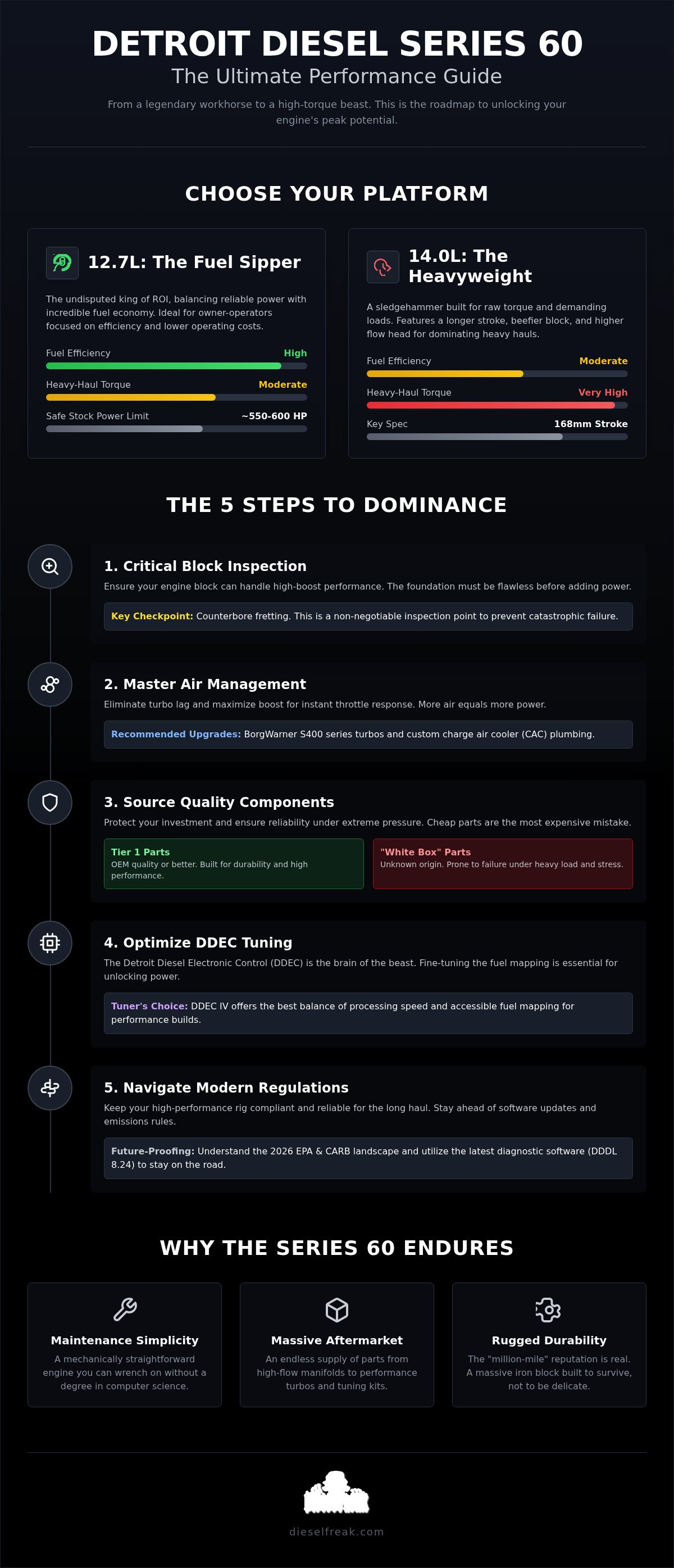
Pick your weapon. The 12.7L and 14.0L are the two titans of the detroit diesel series 60 lineup. One is a precision tool for efficiency. The other is a sledgehammer for raw torque. Choosing the right platform depends on your mission. Do you want to save at the pump or dominate the drag strip? Both engines share the same legendary DNA; their personalities couldn't be more different. The 12.7L was the mainstay for years, while the 14.0L stepped in to handle the heavier, more demanding loads of the 21st century.
Structural differences are subtle but vital. The 14.0L uses a longer 168mm stroke compared to the 12.7L's 160mm. This change required a beefier block and a head designed for higher flow. The 14.0L also typically features a larger oil pump to keep up with the increased mechanical stress. These aren't just minor tweaks. They are fundamental changes that define how the engine responds to a heavy right foot. If you're pulling 80,000 pounds over the Rockies, that low-end grunt is your best friend. The 12.7L relies more on its ability to maintain high average speeds with less drag.
The 12.7L: The Fuel Sipper with a Punch
The 12.7L is the undisputed king of ROI. Owner-operators choose this displacement because it balances power with incredible fuel economy. The internal components are over-engineered. The rod and main bearings are massive. This creates a bottom end that's practically bulletproof under standard loads. You can safely push a stock 12.7L to about 550 or 600 horsepower before you need to worry about internal failure. It’s the smartest choice for a truck that needs to stay on the road and out of the shop. It lacks the raw displacement of its bigger brother, but it makes up for it with reduced weight and lower operating costs.
The 14.0L: The Heavyweight Champion
The 14.0L is the heavyweight champion of the detroit diesel series 60 family. Detroit increased the bore and stroke to find more displacement and more torque. It’s the preferred platform for anyone chasing 700+ horsepower. It isn't perfect; late-model 14.0L units are known for head gasket issues and EGR heat soak. You fix these flaws during the rebuild. Use high-tensile head studs and optimized cooling components. The 14.0L block is a beast that handles extreme cylinder pressures. It loves big turbos. It thrives on aggressive fuel maps. If your goal is to build the baddest rig in the fleet, displacement is your best friend.
Street builds usually lean toward the 12.7L for its reliability. Track builds and heavy-haulers need the 14.0L's displacement. Whatever you choose, don't cut corners on your hardware. High-performance builds demand Class 8 performance parts that can survive the heat. The right platform is just the start. The real magic happens when you start adding boost.
The Performance Rebuild: Beyond the Basic Overhaul Kit
Stock overhaul kits are designed for the average fleet truck. They meet OEM specs, but OEM specs are for factory horsepower. When you start pushing 30 or 40 pounds of boost through a detroit diesel series 60, those standard parts become the weak link. You need components that thrive under pressure. Standard rings will flutter. Stock bearings will flake. A performance rebuild isn't just about replacing parts; it's about reinforcing the iron. Don't settle for "good enough" when you're building for dominance.
Start with the foundation. Check the block. Inspect the counterbores for fretting with a precision depth gauge. If the liners aren't sitting perfectly flush, your head gasket won't stand a chance against high cylinder pressures. Machining the block for stainless shims is a non-negotiable step for any serious build. It ensures a stable platform for the high-performance pistons and rings that follow. A dropped liner is a death sentence for your engine. Do the work now or pay for it later.
Upgrade your internals. Use forged pistons and high-tensile rings that can handle the extreme heat of a big turbo. Performance rod bearings with hardened backings prevent spun bearings when you're matting the pedal. Don't ignore the oil pump. A high-flow oil pump is essential for modified engines. It maintains pressure at high RPMs and keeps the piston cooling nozzles flowing. Friction is the enemy. Flow is the cure. High-horsepower builds generate extreme heat that only a consistent oil supply can manage.
Head Work for Maximum Airflow
Air is power. Porting and polishing the head might seem like overkill for a heavy-duty diesel, but it pays off in lower exhaust gas temperatures (EGTs). Smoother runners mean less turbulence and faster spool times. You must upgrade your valve springs. Stock springs can't always close the valves against extreme boost, leading to valve float. Match your camshaft profile to your turbo choice. A performance cam changes the timing to maximize the air coming in and the exhaust going out. It turns a sluggish engine into a responsive monster.
Fuel System Upgrades: Feeding the Beast
You can't make power without fuel. Performance injectors are the heart of the system. Look for units that offer superior atomization even at high volumes. This ensures a complete burn and prevents melting a piston. Fuel supply is just as critical. A high-flow lift pump ensures the injectors never run dry. It keeps the pressure steady and the fuel cool. Optimize your fuel return system. Keeping those temperatures down protects the injectors and keeps the detroit diesel series 60 running at peak efficiency all day long.
Dominating the Road: High-Performance Turbochargers and Tuning
The turbocharger is the heart of your performance gains. It breathes life into the iron. A stock turbo is built for fuel economy and quiet operation. You want raw power and immediate response. Upgrading the turbo on your detroit diesel series 60 is the single most effective way to transform how your truck pulls. It forces more air into the cylinders; it creates the combustion needed for massive torque. Don't choke your engine with factory restrictions. Give it the air it craves.
BorgWarner S400 series turbos are the gold standard for a reason. They offer unmatched durability and high-flow efficiency. These units handle the extreme heat of a heavy haul without breaking a sweat. But a big turbo is useless without the right support. Custom charge air cooler plumbing is essential for maintaining boost pressure. Factory boots and pipes often fail under high-boost applications. They leak; they burst; they rob you of power. Secure your system with heavy-duty plumbing to ensure every pound of boost reaches the intake manifold.
Selecting the Right Turbo for Your Application
Choose your setup based on how you drive. A single turbo setup is simple and reliable for most street applications. It offers a clean installation and plenty of top-end power. Compound setups use two turbos to eliminate lag and provide a massive power band. They are the ultimate choice for heavy-haulers who need instant torque. Pay attention to A/R ratios. A smaller A/R ratio gives you faster spool times; a larger ratio provides more top-end breathing room. Diesel Freak turbos out-perform stock replacements because they are engineered for the specific demands of high-performance Class 8 engines.
Tuning the DDEC for Power and Efficiency
The DDEC is the brain of the beast. Stock software is conservative and safe. Custom fuel maps unlock the hidden potential within your controller. You move beyond generic performance chips that just dump fuel. Professional tuning using the latest software like DDDL 8.24 adjusts injection timing to match your new airflow. This synergy between a high-flow turbo and a custom tune creates a balanced machine. It keeps your Exhaust Gas Temperatures (EGTs) in check. It protects your engine longevity while delivering 700+ horsepower. You aren't just making it faster; you're making it smarter.
Ready to push your rig to the limit? Upgrade your air management with our high-performance Turbo chargers and feel the difference on the next grade. Performance is a choice. Make the right one.
Sourcing the Best Parts for Your Series 60 Build
High-performance builds demand Tier 1 components. Cheap "white box" parts are a death sentence for a detroit diesel series 60 pushing serious boost. These bargain-bin components lack the metallurgy and precision needed for high cylinder pressures. They look the same on the shelf, but they fail on the road when the heat climbs. You need hardware that matches your ambition. Diesel Freak supports your build with expert-selected components that we trust in our own rigs. We don't just sell parts; we provide the mechanical synergy required for dominance. Build a relationship with a shop that lives for performance. You want an ally who understands why you're chasing high-horsepower goals, not a clerk reading from a catalog. Building a high-performance detroit diesel series 60 is a marathon; every part must be up to the task.
This dedication to quality is just as important when choosing your next vehicle; for instance, Stone Road Auto provides high-quality pre-owned vehicles for those in the Rochester area who demand reliability in every part of their fleet.
Must-Have Accessories for the Series 60
Performance isn't just about the big iron. It's in the details. High-durability charge air cooler boots and heavy-duty clamps are mandatory. They prevent boost leaks that kill your power and skyrocket your EGTs. Stock rubber can't handle the pressure of a high-boost build. Custom exhaust manifolds are another essential upgrade. They improve flow and lower temperatures before the air even hits the turbo. Every degree you drop is a win for longevity. While you're wrenching, make sure you look the part. Grab some Diesel Freak apparel to show you're part of a community that respects raw power and unapologetic grit.
Final Checklist Before You Fire It Up
The build isn't over until the break-in is done right. Follow strict break-in procedures to seat the rings and protect the bearings. This isn't the time for a light foot; you need to put the engine under load to ensure everything seats properly. You must monitor your vitals constantly. Accurate boost and EGT gauges are your early warning system. They tell you if your tune is spot on or if you're pushing the iron too hard. Don't fly blind. Knowledge is power; data is survival. Verify your oil pressure and coolant temps before you hit the highway. Ensure your charge air cooler plumbing is tight and your software is updated to the latest version.
Get the high-performance Detroit parts you need at Diesel Freak and start your transformation today. Don't settle for mediocre results. Build it right; build it to last.
Reclaim the Road with Raw Power
Building a legendary rig starts with a single choice: settle for factory specs or push for absolute dominance. You've seen why the 12.7L and 14.0L platforms remain the ultimate canvas for heavy-duty performance. You know that standard overhaul kits fail where Tier 1 hardware thrives. Real performance is a calculated combination of precision block work and high-boost air management. Your detroit diesel series 60 deserves more than off-the-shelf replacements. It needs the grit of high-performance BorgWarner turbos and the intelligence of expert performance tuning solutions. We provide the rugged Class 8 components built for the long haul; every part is selected to handle the heat of the grade.
Don't just fix your engine. Rebuild it to lead the fleet and reclaim the torque you've been missing. We advocate for a rugged, unapologetic lifestyle where mechanical superiority is the only goal. Ready to transform your iron into a high-torque beast? Upgrade your Series 60 with Diesel Freak performance parts and experience the thrill of raw, mechanical power. The road is waiting. Go take it and leave the competition in the rearview.
Frequently Asked Questions
How much horsepower can a Detroit Diesel Series 60 handle?
A stock 12.7L bottom end safely handles up to 600 HP; however, a built 14.0L platform can exceed 800 HP with the right internals. Pushing beyond these limits requires forged pistons and high-tensile head studs to manage extreme cylinder pressure. The iron is strong but it isn't invincible. Respect the limits of your rotating assembly to avoid catastrophic failure on the road.
What is the best turbocharger for a Detroit 12.7L?
The BorgWarner S400 series is the undisputed gold standard for the 12.7L platform. It offers the best balance of spool time and top-end flow for Class 8 applications. Choose a 75mm or 78mm inducer depending on your specific power goals and driving style. It delivers the air volume needed to transform a fuel-sipper into a high-torque beast without sacrificing reliability.
Can I upgrade my DDEC II to a DDEC IV system?
Yes, you can upgrade from DDEC II to DDEC IV, but it requires a complete wiring harness swap and sensor updates. The DDEC IV offers faster processing speeds and more precise fuel mapping for performance tuning. It's the preferred brain for any serious detroit diesel series 60 build. Don't waste time with outdated electronics when you're chasing modern power levels and better diagnostic capability.
What are the most common failure points in a Series 60 during a rebuild?
Counterbore fretting and dropped liners are the most frequent killers of a high-performance rebuild. If the liner height isn't perfect, you'll blow head gaskets under boost. Inspect the block surface with precision tools before you even think about assembly. Other risks include worn camshaft lobes and cracked injector tips. Do the inspection work right the first time or you'll pay for it twice.
How does performance tuning affect the fuel economy of a Class 8 truck?
Professional performance tuning often improves fuel economy by optimizing injection timing and reducing engine drag. You spend less time downshifting and more time in the sweet spot of the power band. While you're making more power, the engine runs more efficiently under load. It’s about working smarter, not just harder. A balanced tune pays for itself at the pump while delivering the grunt.
Why is charge air cooler plumbing critical for high-boost setups?
Factory boots and clamps aren't designed to hold the 35 PSI of boost generated by performance turbos. Leaking plumbing causes the turbo to overspeed and EGTs to skyrocket. You lose power and risk melting internal components. Heavy-duty charge air cooler plumbing ensures every pound of compressed air reaches the intake. It’s the difference between a reliable, high-performance rig and a frustrating roadside breakdown.
What is the difference between an in-frame and an out-of-frame rebuild?
An in-frame rebuild happens while the block stays in the chassis, covering liners, pistons, and bearings. An out-of-frame rebuild involves pulling the engine to machine the block and balance the crankshaft. For high-horsepower goals, the out-of-frame approach is superior. It allows for a total inspection of the block and ensures the foundation of your detroit diesel series 60 is absolutely flawless before assembly.
How often should I service a high-performance Series 60 engine?
Shorten your service intervals to every 10,000 to 12,000 miles when running high-output tunes. Performance builds generate more heat and put more stress on the oil. Use high-quality synthetic lubricants and check your filters frequently. Monitor your oil samples to catch bearing wear before it turns into a disaster. High-performance iron requires high-performance maintenance to stay at the top of its game for the long haul.
Disclaimer
Diesel Freak LLC is in no way associated, sponsored, or affiliated with Any OEM manufacturer. Products from Diesel Freak LLC presented in this listing are not to be confused with any of the products or trademarks of any OEM company. All parts listed to fit these manufacturers are replacement aftermarket parts.