

Roxor speed limiter removal isn’t a universal switch. The right option depends on your vehicle’s exact configuration, and a calibration change can affect more than the number on the speedometer.
If you’re wondering whether your Roxor can run beyond its factory limit, start by clarifying what you want to change and how you use the vehicle. A tune may affect drivability or place additional strain on components, and road-use rules and warranty terms also matter. Before making a change, confirm what’s supported for your model and intended use.
This guide covers what a limiter does, why options may differ by Roxor, and what to weigh before choosing a tune or keeping the factory calibration. It also outlines questions to ask about compatibility, drivability, durability, applicable laws, and warranty terms. Diesel Freak offers ROXOR tuning and Roxor engine and driveline parts. Treat limiter changes as a vehicle-specific calibration decision, not a shortcut. Get clear on your setup and goals before choosing a path.
Key Takeaways
- Factory speed limits and available calibration options can vary by Roxor model year and configuration, so identify your exact vehicle before comparing tuning paths.
- Electronic calibration and hardware upgrades are different changes, and neither guarantees a specific top speed or outcome.
- Before considering Roxor speed limiter removal, compare keeping the factory calibration, investigating symptoms, and discussing options with a qualified tuning provider.
- Prepare your model year, configuration, modifications, symptoms, and intended use before asking about compatibility, drivability, durability, road-use rules, or warranty terms.
- Diesel Freak offers ROXOR tuning. Confirm current options and exact vehicle compatibility directly before choosing a calibration.
What Does a Roxor Speed Limiter Do?
A speed limiter is a programmed control that restricts how fast a vehicle can travel under specified conditions. Manufacturers may use operating limits to keep a vehicle within its intended design parameters. The Speed limiter reference explains the broader purpose and types of these controls, but it doesn’t establish the calibration used in any specific Roxor.
A speed limiter is a programmed ceiling on vehicle operation, not proof that something is wrong with the engine. If you’re researching Roxor speed limiter removal, first determine whether you’re noticing a consistent control limit or a change in how the vehicle runs.
How is a speed limiter different from an engine problem?
A programmed limit is part of a vehicle’s electronic control strategy. If your Roxor behaves consistently at a certain point, a control limit could be involved, but that pattern alone doesn’t confirm the cause. Don’t assume reduced power means the limiter is active.
Uneven acceleration, new warning indicators, unusual noises, or a change from the vehicle’s usual behavior may indicate an issue that needs diagnosis. Note when the symptom occurs and whether it happens consistently. Check the owner’s manual, then consult a qualified technician about unusual behavior before considering a calibration change.
Does every Roxor have the same limiter?
Don’t assume so. Vehicle behavior and available calibration options may depend on model year, configuration, and existing modifications. Changes to the vehicle can also affect how it behaves, so a tune that suits one setup may not suit another.
Before asking about compatibility, record your model year and configuration, along with any engine, driveline, tire, or other modifications you know about. Include the vehicle’s intended use. These details help a tuning provider assess your specific setup instead of making assumptions based on the Roxor name alone.
There’s no universal speed figure to apply to every vehicle without confirming its exact configuration and the source of the information. A speed reading by itself also can’t tell you whether the vehicle has reached a programmed limit or is experiencing a fault. Start with the machine’s details, then seek advice based on its actual behavior and setup.
How Roxor Speed Limiter Changes Relate to Engine Calibration
A calibration change and a hardware upgrade are different. A tune changes how the vehicle’s electronic controls manage selected engine functions, while a hardware upgrade changes physical components. Either may affect how the vehicle behaves, but neither guarantees a particular top speed. A speed limit is only one part of the overall setup.
What should owners know about ECU calibration?
The engine control unit, or ECU, is an electronic system that manages selected engine functions. In vehicles with electronic engine controls, calibration influences how those functions operate. That’s the general explanation, not confirmation of the Roxor’s exact electronic architecture or what a particular calibration changes. Ask a tuning provider to verify the details for your model year and configuration.
Think of a tune as a change to the control strategy, not a mechanical repair or a promise of a specific result. Roxor speed limiter removal may come up as part of a tuning discussion, but ask exactly what a proposed calibration does, what it doesn’t do, and whether it’s intended for your vehicle and use.
What can change after a calibration adjustment?
Throttle response or other aspects of operating behavior could change, depending on the vehicle and calibration. Results aren’t automatic. Vehicle condition, existing modifications, and operating environment all matter. A change that feels sharper in one setup may not suit another.
Consider more than acceleration. Ask how the proposed calibration could affect drivability and component stress, and whether it has emissions implications. The U.S. Environmental Protection Agency explains its enforcement focus on aftermarket devices that defeat emissions controls in its guidance on EPA enforcement against defeat devices. That reference does not establish that every speed-limiter-related tune is a defeat device. Ask whether a proposed change affects emissions controls, and check the requirements that apply to your vehicle and intended use.
Evaluate a tune against the individual vehicle, its condition, its modifications, and how it will be used. Before asking for advice, note the model year and configuration, existing engine or driveline changes, and any symptoms. Clear information helps a provider discuss compatibility and trade-offs instead of guessing.
Diesel Freak lists ROXOR tuning among its offerings. Review the ROXOR tuning options, then confirm current availability and exact vehicle compatibility directly before choosing.
Roxor Speed Limiter Removal: Compare the Risks and Alternatives
More speed on paper doesn’t automatically mean safer, more predictable, or more usable performance. A calibration change may not address the real issue if the vehicle has a fault, and it can bring trade-offs that depend on the machine and how it’s used. Compare the options before deciding.
| Path | Goal and questions to ask | Uncertainties and when it may fit |
|---|---|---|
| Keep factory calibration | Preserve the current setup. Does it meet your actual needs, and is the vehicle behaving as expected? | It may not meet a specific performance goal. It can fit when the vehicle runs normally and the factory behavior is acceptable. |
| Diagnose a suspected issue | Find the cause of a change in behavior. What symptoms occur, and when did they begin? | The cause can’t be assumed from a speed reading or reduced power alone. Start here if the vehicle behaves differently than expected. |
| Consult a qualified tuner | Explore whether a calibration suits your setup. What changes are proposed, and what are the compatibility and trade-off considerations? | Results and impacts depend on the vehicle, calibration, condition, and use. This path may fit when you have a clear goal and verified vehicle details. |
Is limiter removal worth the trade-offs?
There’s no blanket answer. Weigh Roxor speed limiter removal against a specific, measurable goal, your vehicle’s condition, and advice that applies to your exact configuration. Ask about possible effects on drivability and components. Don’t assume a change is safe, legal, or warranty-neutral in every case. Verify public-road rules with the relevant authorities, emissions implications against applicable requirements, insurance terms with your insurer, and warranty terms with the warranty provider.
What alternatives should owners consider first?
Start with the basics: check tire condition and maintenance history, then write down any performance symptoms. If the machine feels or responds differently than expected, seek professional diagnosis before pursuing a tune. Consider broader ROXOR upgrades only if they directly address your goal. A well-matched part or repair may be more relevant than changing calibration, but neither guarantees a particular top speed.
Base the decision on evidence, not assumptions. If factory behavior suits your use, leaving the calibration unchanged is a valid choice. If it doesn’t, get the vehicle assessed and clarify the technical, road-use, emissions, insurance, and warranty questions before choosing a tuning path.
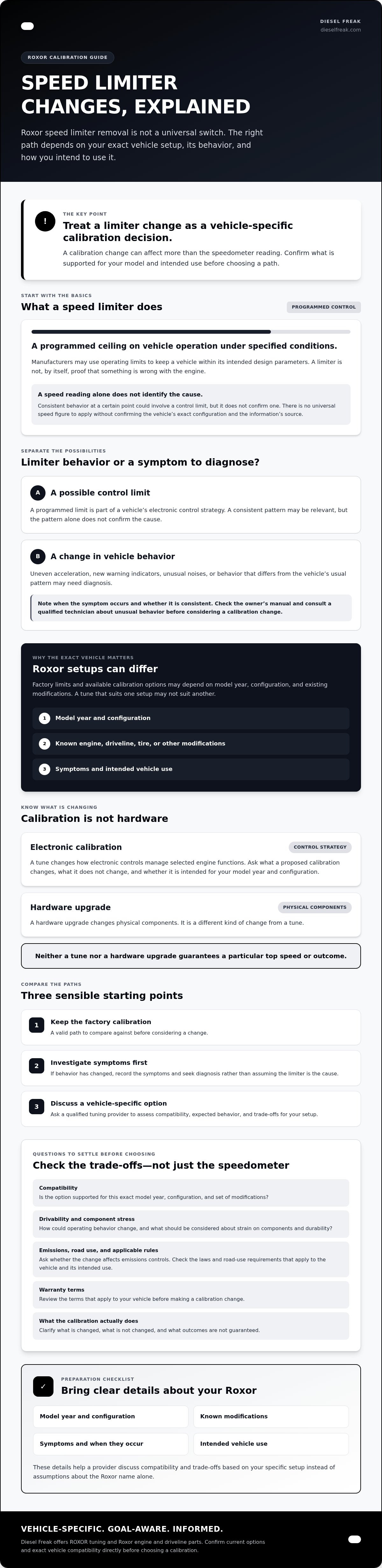
What to Check Before Pursuing Roxor Speed Limiter Removal
Prepare before speaking with a tuning provider. Accurate vehicle details help them assess whether an option may fit, while a clear goal keeps the discussion focused on what you need. Gather these details first:
- Identify the vehicle. Record its model year and configuration. Include any identifying details the provider requests to confirm which setup you have.
- List modifications. Note existing engine, driveline, tire, or other changes that could affect vehicle behavior or calibration compatibility.
- Describe symptoms. Write down what the vehicle does, when it happens, and whether the behavior is consistent. If something seems wrong, seek diagnosis before treating it as a tuning question.
- State your intended use. Explain where and how you plan to operate the Roxor, and name the specific performance concern or goal.
- Confirm support and terms. Ask what configuration information the provider needs, whether your exact vehicle is supported, what the proposed change covers, and what written terms apply.
What information should you give a tuner?
Bring the details together rather than relying on scattered guesses. Be specific about the modifications you know are installed and the behavior you want to address. Ask which additional configuration details the provider needs to verify compatibility. If you don’t know something, say so. Clear uncertainty is more useful than an assumption.
Which safety, legal, and warranty questions matter?
Ask how a proposed calibration could affect safe operation, drivability, and component reliability. Verify road-use and emissions requirements with current official sources that apply to your vehicle and intended use. Don’t rely on a general online claim. Review the vehicle manufacturer’s warranty terms and ask the tuning provider for its written terms before authorizing a change. Check insurance implications directly with your insurer, too.
Take the checklist to a provider and ask for answers specific to your Roxor. Diesel Freak lists ROXOR tuning among its offerings. Explore ROXOR tuning options, then confirm current availability, exact vehicle compatibility, and applicable terms before choosing a path.
Choosing a Roxor Tuning Path with Diesel Freak
Diesel Freak lists ROXOR tuning among its offerings, so it’s a relevant place to ask about current options. That doesn’t confirm that a specific calibration removes a speed limit or suits every Roxor. Treat Roxor speed limiter removal as a question to clarify, not a guaranteed product feature or outcome.
Before choosing a tuning path, match its stated purpose to your verified vehicle configuration and intended use. Ask what details the provider needs to confirm compatibility, what the calibration is designed to change, and what support and written terms apply. If an option doesn’t address your actual goal, pause and compare alternatives.
How should owners evaluate a tuning option?
Use this decision check before ordering:
- Vehicle fit: Has the provider confirmed compatibility with your model year, configuration, and existing modifications?
- Purpose: Does the stated tuning purpose align with your specific performance goal and intended use?
- Support: What information or assistance is available if you have questions about fitment or the calibration?
- Terms: Have you reviewed the applicable written terms and considered the warranty, road-use, and emissions questions raised earlier?
Parts may also be relevant if your goal involves more than calibration. Diesel Freak lists Roxor engine and driveline parts. Match any upgrade to the problem you’re trying to solve, and don’t assume that a hardware change or tune will produce a particular top speed. For general ownership context, refer to the Mahindra Roxor ownership guide.
What is the next step for a Roxor owner?
Bring together your model year and configuration, modification list, intended use, symptoms, and questions. This gives the retailer a clearer starting point and helps you ask whether current tuning options are supported for your exact vehicle. If compatibility or the proposed effect is unclear, get clarification before deciding.
Diesel Freak offers ROXOR tuning and Roxor engine and driveline parts. Share your vehicle details and ask about current ROXOR tuning options, compatibility, and terms before choosing a path.
Make Your Next Roxor Tuning Decision With Confidence
Roxor speed limiter removal isn’t a one-size-fits-all fix. A limiter is different from a mechanical problem, and a calibration change can affect how a vehicle operates without guaranteeing a particular top speed. Start with your Roxor’s exact configuration, modifications, condition, and intended use.
Before choosing a tune, confirm vehicle compatibility and ask about potential effects on drivability and component durability. Check road-use and emissions requirements with current official sources, and review warranty and insurance terms with the relevant providers. If your Roxor is behaving unexpectedly, get the issue diagnosed before treating it as a tuning decision.
Diesel Freak offers ROXOR tuning. Bring your vehicle details and questions, then ask Diesel Freak about current ROXOR tuning options. Confirm the fit before making a change.
Frequently Asked Questions
Can you remove the speed limiter on a Mahindra Roxor?
A speed limiter may be addressed through a vehicle-specific calibration, but that doesn’t mean every Roxor supports the same option or outcome. Model year, configuration, and existing modifications matter. Ask a tuning provider to confirm compatibility and explain what a proposed calibration changes before proceeding. Don’t use bypass instructions or assume a tune marketed for one Roxor will suit another.
How fast can a Roxor go after speed limiter removal?
There’s no single reliable top-speed figure to promise after a calibration change. Actual results depend on the vehicle’s configuration and condition, the calibration, modifications, and operating conditions. A tune doesn’t guarantee a particular speed, and a speed increase alone doesn’t establish safe or suitable operation. Ask the provider what outcomes are documented for your exact setup, and treat any estimate as configuration-specific.
Is Roxor speed limiter removal legal for road use?
Removing or changing a limiter doesn’t make a Roxor legal for public-road use. Road-use rules depend on the vehicle and the laws that apply where it will be driven. Before operating on public roads, check current requirements with the relevant official authorities. Also ask whether a proposed calibration affects emissions compliance. Don’t rely on registration claims or a tuner’s general statement instead of checking the rules that apply to you.
Will removing a Roxor speed limiter damage the engine?
Not necessarily, but no blanket assurance applies to every Roxor or calibration. Effects can depend on vehicle condition, modifications, calibration, and how the vehicle is operated. Ask a qualified provider to explain possible impacts on drivability and component durability for your specific setup. If the Roxor already has unusual symptoms, have them diagnosed before pursuing a tune. A calibration change isn’t a fix for an unknown mechanical problem.
Can a Roxor tune affect the warranty?
It can have warranty implications, but the result depends on the warranty terms and circumstances. Don’t assume a tune is warranty-neutral or that it automatically cancels all coverage. Review the applicable manufacturer warranty documents and ask the provider for its written terms before making a change. For a definitive answer about coverage, contact the warranty provider directly and keep its response with your vehicle records.
What should I check before tuning a Roxor?
Record the model year, configuration, known engine or driveline modifications, symptoms, and intended use. Then ask the provider to confirm exact vehicle compatibility, describe the calibration’s purpose, and explain available support and written terms. Check road-use and emissions requirements with current official sources, and review warranty and insurance implications with the relevant providers. If the vehicle is behaving unexpectedly, seek diagnosis before treating the concern as a tuning issue.
Does Diesel Freak sell Roxor tuning?
Yes. ROXOR tuning is among Diesel Freak’s listed offerings. That doesn’t confirm that a specific limiter-removal option is currently available or supported for every vehicle configuration. Contact Diesel Freak with your Roxor’s model year, configuration, modifications, and intended use. Ask about current tuning options and exact compatibility before choosing a calibration.
Disclaimer
Diesel Freak LLC is in no way associated, sponsored, or affiliated with Any OEM manufacturer. Products from Diesel Freak LLC presented in this listing are not to be confused with any of the products or trademarks of any OEM company. All parts listed to fit these manufacturers are replacement aftermarket parts.