

What if an upgrade meant to make your truck stronger simply exposes the next weak link? Choosing Class 8 semi truck performance parts isn’t just about chasing big claims. Fitment depends on the engine and truck configuration, and a part that works in one setup may not suit another.
Every rig has a job to do. Long-haul miles, heavy loads, and daily operating demands all shape which upgrades make sense. Compare parts with your truck’s actual configuration and goals in mind, rather than relying on hype alone.
This guide covers key upgrade categories, including turbochargers, charge air cooler plumbing, and engine or driveline parts. You’ll learn how to plan compatible upgrades, assess performance claims, and check the details before ordering. Diesel Freak is a family-owned retailer specializing in performance parts for Class 8 trucks. Start with the setup you have, then choose parts that work together.
Key Takeaways
- Match upgrades to the truck’s job, route demands, and configuration before comparing parts.
- Understand how turbochargers, charge air cooler plumbing, engine parts, and driveline components serve different roles in a system.
- Evaluate Class 8 semi truck performance parts by fitment, intended use, and trade-offs, not headline claims alone.
- Confirm exact truck and engine details, part specifications, and compatibility before ordering.
- Follow a clear upgrade sequence to explore relevant parts without assuming performance gains or fitment.
Class 8 Semi Truck Performance Parts: Start With the Job Your Truck Does
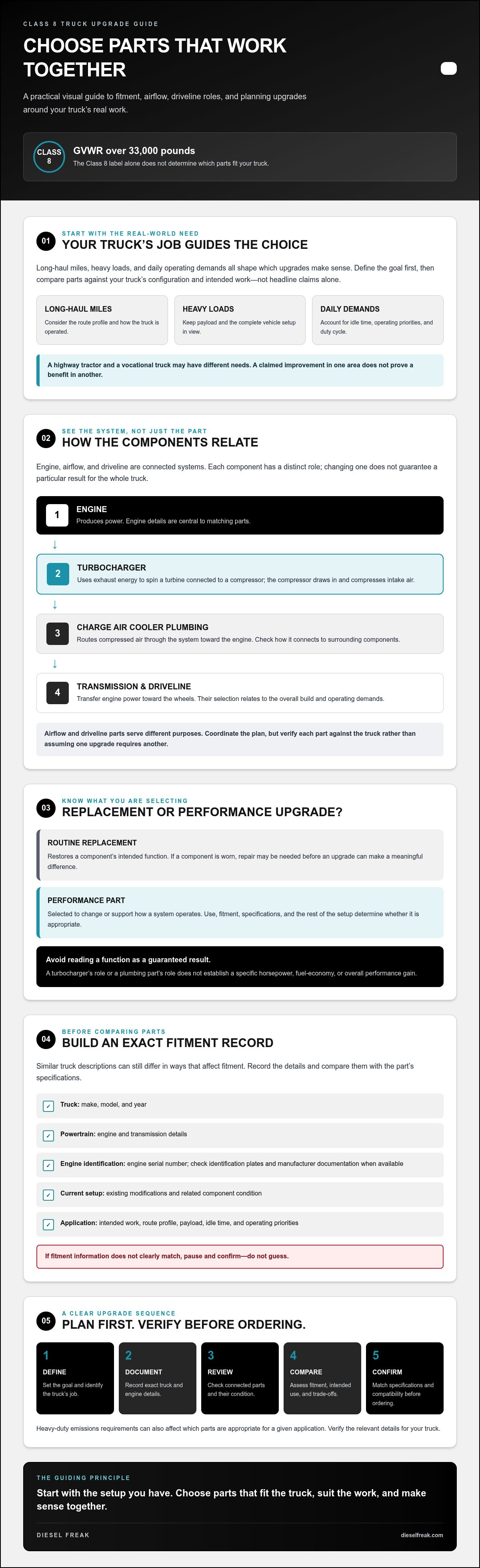
A performance upgrade has a different purpose from a routine replacement. A replacement restores a component’s intended function, while a performance part is selected to change or support how a system operates. That distinction matters: a worn component may need repair before an upgrade can make a meaningful difference.
Class 8 performance parts are components selected to change or support a truck’s operating performance. Their usefulness depends on fitment and the demands of the complete vehicle setup. Class 8 refers to trucks with a Gross Vehicle Weight Rating (GVWR) over 33,000 pounds, as described in this overview of Class 8 truck classifications. The label alone doesn’t tell you which parts fit. The engine, transmission, existing components, and intended work all matter.
Which operating goals should guide a performance upgrade?
Define the goal before comparing parts. Are you looking for a different engine response, support for airflow, improved drivability, or a replacement for a component that no longer meets the truck’s needs? These are separate objectives and may call for different parts. A claimed improvement in one area doesn’t prove a benefit in another.
Consider the payload, route profile, idle time, and operating priorities. A highway tractor that spends long stretches at cruising speed may have different needs from a vocational truck working at lower speeds, carrying changing loads, or spending more time idling. Let the duty cycle guide your choice, not a generic performance claim. Results also depend on how a selected part works with the rest of the truck. No single upgrade guarantees a specific outcome across every configuration.
What truck details should you identify first?
Make a record before comparing parts. Write down the truck’s make, model, and year, along with its engine and transmission details. Note existing modifications too. Trucks with similar model descriptions can still differ in ways that affect fitment.
Check identification plates and manufacturer documentation when available. Record the engine serial number and compare the exact configuration with the part’s specifications before ordering. If the fitment information doesn’t clearly match your truck, pause and confirm it rather than guessing. A careful check keeps the upgrade plan grounded in the truck you operate.
How Class 8 Engine and Airflow Performance Parts Work Together
Think of the engine, airflow path, and driveline as connected systems, not isolated upgrade targets. The engine produces power. A turbocharger uses exhaust energy to compress incoming air, and charge air cooler plumbing carries that air through the system toward the engine. The transmission and driveline then transfer engine power to the wheels. Each part has a distinct job, so changing one component doesn’t guarantee a particular result for the whole truck.
Charge air cooler plumbing connects sections of the airflow path, carrying compressed air between system components toward the engine. Its role is to route air. The plumbing alone doesn’t establish a horsepower or fuel-economy gain. The outcome depends on fit, the condition and configuration of surrounding components, and the truck’s intended use.
What does a turbocharger contribute to a Class 8 diesel?
A turbocharger uses energy in the engine’s exhaust to spin a turbine connected to a compressor. The compressor draws in and compresses intake air. That describes its function, not a promise of a particular performance increase. Fitment depends on the engine application and existing system configuration, so match the turbocharger to the truck and engine details before choosing. For more background, read this BorgWarner turbocharger guide.
Why should you assess charge air and driveline parts as a system?
Air travels through a complete path. Charge air cooler plumbing connects components along that route, so check that proposed parts match the existing configuration and connect as intended. When changing one part, review the compatibility and condition of related components. Don’t assume a turbocharger or plumbing upgrade will deliver the same result on every engine setup.
Driveline parts serve a different purpose. They transmit power from the engine and transmission toward the wheels, so their selection relates to the truck’s overall build and operating demands, not just airflow. Treat engine and driveline choices as separate decisions within one coordinated plan. Verify specifications for your truck rather than assuming an engine-side upgrade requires a driveline change.
Heavy-duty emissions requirements can also affect which parts are appropriate for a given application. For background, consult the EPA’s heavy-duty greenhouse-gas standards page, and verify current requirements for your truck before making a decision.
Once you know the system role and fitment details to check, explore Class 8 diesel parts as potential options. Confirm current availability and exact compatibility before ordering.
Compare Class 8 Performance Parts by Fitment, Workload, and Trade-Offs
Compare each part with the truck’s exact configuration and the job you expect it to do. A turbocharger, charge air cooler plumbing, engine part, and driveline part serve different purposes. No single upgrade guarantees better performance across every truck. Check specifications, fitment, and the evidence behind any stated performance figures before treating a claim as a proven result.
| Category | Intended purpose | Fitment checks | Questions to verify |
|---|---|---|---|
| Turbocharger | Moves compressed intake air into the engine’s airflow system. | Engine application, existing configuration, and connections. | Do the documented specifications match this engine and its supporting components? What evidence supports any output or efficiency claim? |
| Charge air cooler plumbing | Routes air between components along the charge-air path. | Connection details, routing, and compatibility with the installed setup. | Does it match the truck’s current components and modifications? |
| Engine parts | Support a defined engine function or planned build. | Engine identification, serial number, and exact application. | Is this an upgrade or a replacement for a maintenance need? Which specifications confirm fit? |
| Driveline parts | Support power transfer from the engine and transmission toward the wheels. | Truck configuration and the specific driveline component involved. | Does the part suit the planned build and documented requirements? |
How do you evaluate turbocharger and charge air options?
Start with the application, not an impressive-sounding claim. Compare the part’s documented engine application and connection details with your truck, then account for existing modifications and supporting components. Ask what test conditions or product documentation support claims about output, efficiency, or durability. If that evidence isn’t available, treat the statement as unverified, not as a guaranteed result. The right match is the one whose specifications align with your setup.
When should engine or driveline parts take priority?
Let the truck’s operating symptoms, planned build, and documented requirements guide your decisions. First separate routine maintenance or repair needs from a performance goal. Replacing a worn component isn’t automatically an upgrade. Then identify which system the part serves and confirm its fitment. For broader category context, see this diesel performance parts guide.
Use the same standard for all Class 8 semi truck performance parts: verify the application, compare specifications with the truck’s configuration, and ask for evidence before relying on a performance figure. This keeps the decision tied to your workload instead of a one-size-fits-all promise.
Use This Pre-Purchase Checklist Before Ordering Class 8 Truck Parts
Fitment checks start with facts, not guesswork. Before ordering Class 8 semi truck performance parts, collect the details that identify your truck, compare them with the part documentation, and resolve any mismatch. Use this checklist to keep your decision grounded in your actual setup.
- 1. Identify the truck. Record its year, make, and model. Use identification plates and manufacturer documentation where available.
- 2. Confirm the engine and transmission. Note the engine make and model, serial number, and transmission details. Verify the exact configuration, since a broad engine description may not establish fitment.
- 3. Gather part information. Write down relevant part numbers and specifications for the component you’re replacing or upgrading. Compare them with the proposed part’s application details.
- 4. Document existing changes. List modifications that could affect compatibility, along with relevant manufacturer or installer recommendations. Share those details when checking fitment.
- 5. Confirm exact application before purchase. Ask the retailer to verify that the part’s documented application matches your truck and engine. If a specification is unclear or doesn’t line up, pause and get clarification instead of assuming it fits.
- 6. Review what’s included and required. Check product specifications, included components, and installation instructions. Identify any additional requirements stated in the documentation before planning the work.
- 7. Check requirements for your truck. Review applicable emissions requirements, warranty terms, and inspection needs using documentation relevant to your specific vehicle and part. Don’t assume a part is compliant or warranty-safe without confirming the applicable terms.
- 8. Plan the installation. Consider the instructions, tools, and work involved. If the job calls for expertise beyond your experience, consult a qualified technician before installation.
A complete fitment check surfaces questions while they’re still easy to resolve. It also helps distinguish what the part documentation confirms from what still needs verification. Keep your truck details and specifications together while comparing options.
Once you’ve gathered the information and know what to verify, explore Class 8 performance parts at Diesel Freak. Check current availability and confirm exact fitment before ordering.
Build a Class 8 Performance Parts Plan That Fits Your Truck
A solid upgrade plan follows a clear sequence: define the job, identify the truck, compare part fitment, and verify requirements before ordering. This keeps your choices tied to how the rig works, not just a performance claim or familiar part category. The right part still has to match the exact engine and existing configuration.
Which Diesel Freak parts categories align with this guide?
Diesel Freak is a family-owned retailer specializing in high-performance diesel parts for Class 8 semi trucks. Depending on your goal and truck application, categories to explore include:
- Turbochargers for researching engine airflow options.
- Charge air cooler plumbing for components along the charge-air route.
- Engine or driveline parts for other areas of a planned build.
These categories are starting points, not promises of a specific result or confirmation that a part fits your truck. Check current listings, review the documented application, and confirm availability and compatibility before ordering.
What is the next step if you are still comparing?
Bring your truck and engine details into the comparison. Keep the year, make, model, engine identification, relevant part numbers, and existing modifications together. Then compare each option’s verified specifications with that setup. If a listing leaves an application question unanswered, get it clarified before making a purchase decision.
For a confirmed Cummins application, the Cummins engine performance parts guide may offer relevant category context. Use it alongside, not instead of, the part specifications for your exact engine and configuration.
Build deliberately. Match the goal to the truck, verify fitment, and check the requirements that apply to your setup. Ready to compare available categories? Browse Diesel Freak’s Class 8 parts, then confirm current listings and exact application before ordering.
Choose Your Next Upgrade With Confidence
A smart build starts with the truck, not the parts catalog. Define what you want the upgrade to do, confirm your exact engine and configuration, then compare fitment and requirements before ordering. That process helps keep Class 8 semi truck performance parts aligned with your operating demands and the rest of the vehicle, without relying on broad performance promises.
Diesel Freak offers Class 8 categories that include turbochargers, charge air cooler plumbing, and engine or driveline parts. Use those categories as a starting point. Check current listings and verify each part’s availability and application for your truck.
Have your truck and engine details ready, and let the specifications guide your comparison. Explore Class 8 performance parts at Diesel Freak and take the next step toward an upgrade plan built around your rig.
Frequently Asked Questions
What are Class 8 semi truck performance parts?
Class 8 semi truck performance parts are components chosen to support a particular truck’s performance goals or configuration. Examples include turbochargers, charge air cooler plumbing, and engine or driveline parts. Each category serves a different function, and suitability depends on the specific engine, vehicle setup, and intended use. A part’s name or advertised purpose doesn’t confirm fitment, and no upgrade guarantees a particular horsepower or efficiency result.
Which performance parts can improve a Class 8 truck?
The useful category depends on your truck, engine, operating conditions, and desired outcome. Turbochargers and charge air cooler plumbing relate to airflow, while engine and driveline parts address other parts of the vehicle system. Treat these as categories to investigate, not universal fixes. First identify the truck’s exact configuration and goal, then compare documented specifications. Don’t assume one component suits every rig or guarantees a particular performance change.
How do I know whether a performance part fits my semi truck?
Check the truck’s year, make, model, engine configuration, existing modifications, and relevant part numbers against the part documentation. Similar-looking trucks may have different specifications, so a general match to an engine family isn’t enough to establish exact fitment. If the application details are unclear, ask the retailer to confirm them or consult a qualified technician before ordering. Keep identification plate information and manufacturer documentation available during the check.
Can a turbocharger upgrade work with my existing Class 8 setup?
It may, but compatibility depends on the engine application, existing hardware, and the rest of the airflow and control setup. Compare the turbocharger’s documented specifications with your truck’s configuration, and check for any stated supporting requirements. Don’t rely on broad claims about power, efficiency, or durability without product-specific evidence. If compatibility or expected changes remain unclear, get application-specific guidance from the retailer or a qualified professional before committing.
Do Class 8 performance parts affect emissions compliance or warranty coverage?
That depends on the specific part, vehicle, and requirements that apply to its use. Before purchase or installation, review the product documentation, your warranty terms, and relevant emissions rules for the exact truck. Don’t assume a part is compliant or warranty-safe based on a general claim. If the documentation doesn’t answer your question, confirm the details with the manufacturer, retailer, or a qualified professional familiar with your application.
Should I upgrade engine, airflow, or driveline parts first?
There’s no universal upgrade order. Start with the truck’s job, current condition, configuration, and the goal you want to address. Separate required repairs from optional performance changes so a maintenance need doesn’t get mistaken for an upgrade opportunity. Then consider how each proposed part relates to the rest of the setup. Confirm fitment and installation requirements before deciding which category should take priority for your build.
Can I install Class 8 semi truck performance parts myself?
Installation difficulty varies by component and truck configuration. Read the manufacturer’s instructions and honestly assess your tools, experience, and ability to meet the stated safety requirements. Work involving complex systems, calibration, or uncertainty may call for a qualified heavy-duty technician. Before installation, check the documentation for relevant warranty and compliance considerations. Don’t treat a general installation guide as proof that a procedure is appropriate for your specific truck.
Disclaimer
Diesel Freak LLC is in no way associated, sponsored, or affiliated with Any OEM manufacturer. Products from Diesel Freak LLC presented in this listing are not to be confused with any of the products or trademarks of any OEM company. All parts listed to fit these manufacturers are replacement aftermarket parts.